




Have you ever found yourself straining to reach your drink because your coffee table felt awkwardly low or frustratingly high? Finding the right height isn’t just about aesthetics; it’s about ergonomics. The right dimensions ensure your living room remains perfectly comfortable and visually balanced.
The Golden Rule: Aligning with Your Sofa
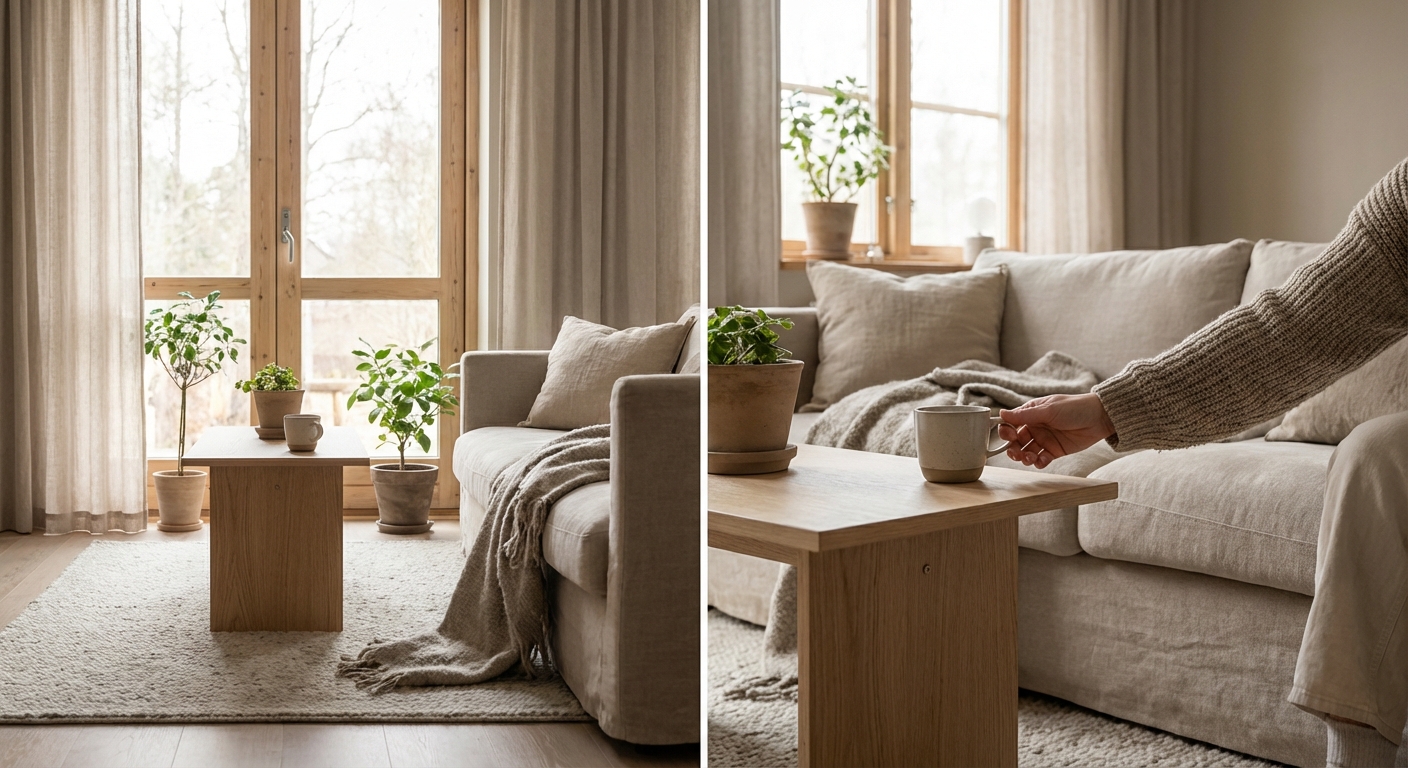
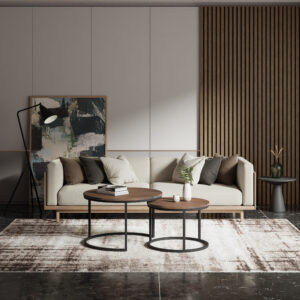
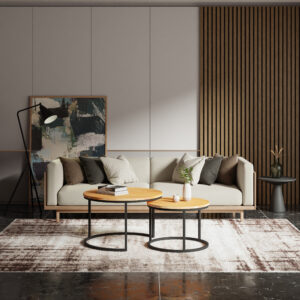
The most important factor when choosing a new piece of furniture is how it relates to your existing sofa. Design experts recommend that a coffee table should sit about 1–5 centimeters lower than your sofa’s seat cushions. This height difference ensures that items on the table are within easy reach without requiring you to bend down uncomfortably or reach too high.
In an ideal layout, the table surface should be level with or slightly below the seat. This maintains clear sightlines and makes the room feel more open. Since the average sofa seat height typically falls between 43–48 cm, a coffee table with a height of 40–46 cm is usually the best fit. This height aligns naturally with a seated person’s elbow height, preventing shoulder strain when picking up objects.
Ergonomics and Comfort Based on Sofa Style
Because modern furniture comes in so many shapes and sizes, your table choice must be tailored to your specific seating. A standard sofa with a 45 cm seat height generally requires a table between 42–44 cm high. However, if you have a low-profile, modern lounge sofa with a seat height of only 38–43 cm, you should choose a lower table, ideally in the 37–39 cm range.
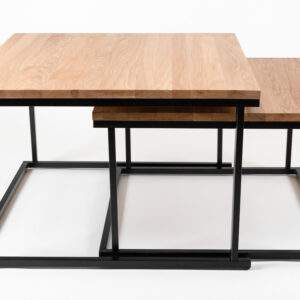
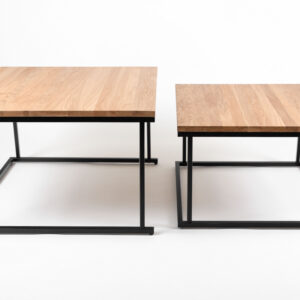
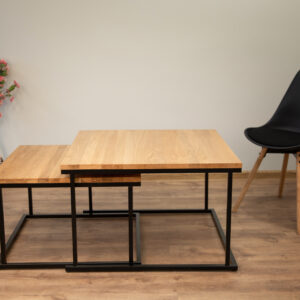
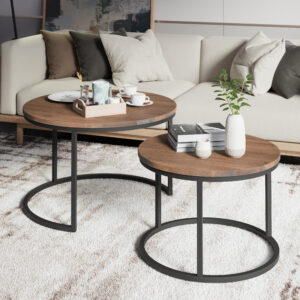
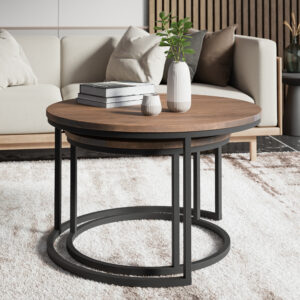
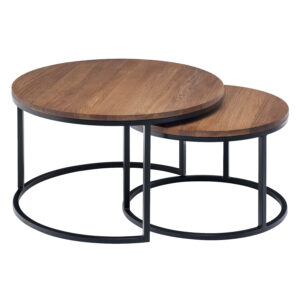
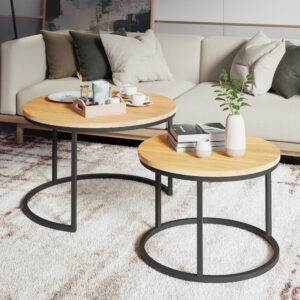
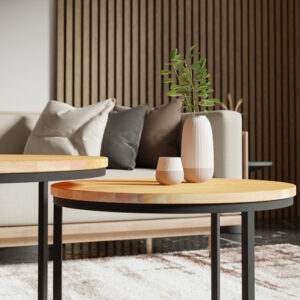
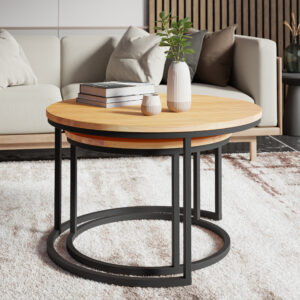
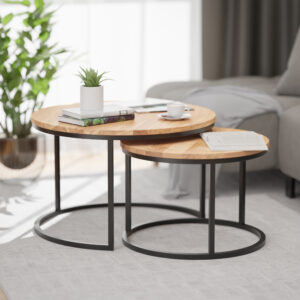
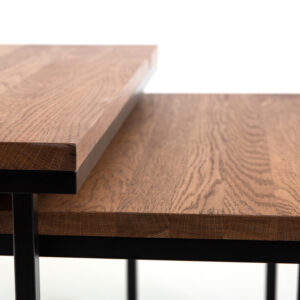
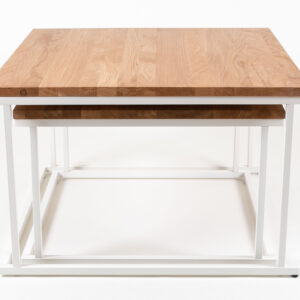
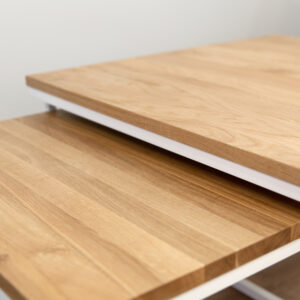
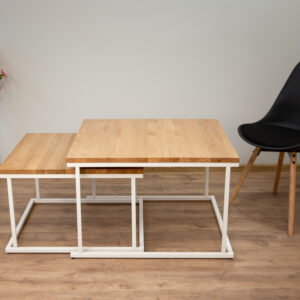
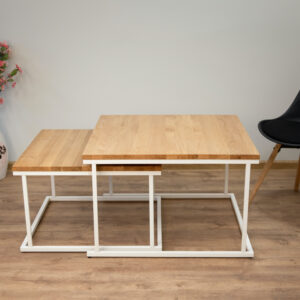
For taller or specialized ergonomic sofas where the seat height reaches up to 51 cm, it is wise to opt for a taller table around 48–50 cm. If you are looking for versatility, consider a nesting table set. These oak coffee tables feature surfaces at different heights, allowing you to slide them together to save space or spread them out to keep drinks and magazines within reach of every guest.
The Importance of Spacing and Clearance
Beyond vertical height, horizontal placement—the distance between the table and the sofa—is crucial. A gap of 45–50 cm between the edge of the sofa and the table is the “sweet spot.” This provides enough legroom to move comfortably while keeping the table close enough for convenience. In smaller rooms, this gap can be tightened to 30–45 cm, while more spacious areas can accommodate up to 60 cm of clearance for easier mobility.
When planning your layout, ensure there is enough walking space in every direction. Pathways between the table and other furniture, such as a TV stand, should be at least 45–60 cm wide. This prevents the room from feeling cluttered and ensures you can move safely through the space, even in dim lighting, without bumping into corners.
Proportions and Visual Balance
Height is just one part of the equation—length and width are just as important for a balanced look. A common interior design rule is that a coffee table should be roughly two-thirds the length of your sofa. For example, if your sofa is 180 cm long, a 120 cm table is the perfect match. In terms of width, the table should be about half the depth of the sofa to maintain balance and provide enough legroom.
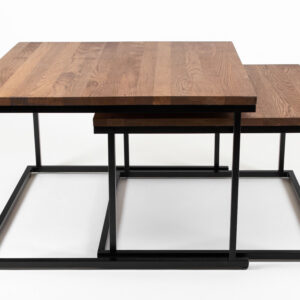
When selecting materials, prioritize durability and the natural warmth of solid wood furniture. Quality wood is an investment that lasts for generations and can be easily restored if needed. Oak and birch edge-glued panels are particularly stable; thanks to modern manufacturing techniques, they resist warping from humidity and temperature fluctuations, maintaining their beauty for decades.
Practical Tips for Making the Right Choice
Before you commit to a purchase, try a simple “test run” at home. Measure the exact height of your sofa seat, then use cardboard boxes or stacks of books to create a mockup of the table in your living room. Sit on the sofa and see if it feels comfortable to set down a cup or a book without straining.
Consider your household’s specific needs as well. If you have small children or elderly family members, rounded corners are a safer choice to prevent injuries. Similarly, for families with young children, a table no higher than 40 cm is often more practical. To keep your table looking new, follow proper maintenance techniques, such as regular oiling and cleaning up spills immediately.
The right coffee table height and placement can transform your living room into a truly functional sanctuary. Find the perfect match for your home from our range of coffee tables and enjoy a space where every detail has been carefully considered.