



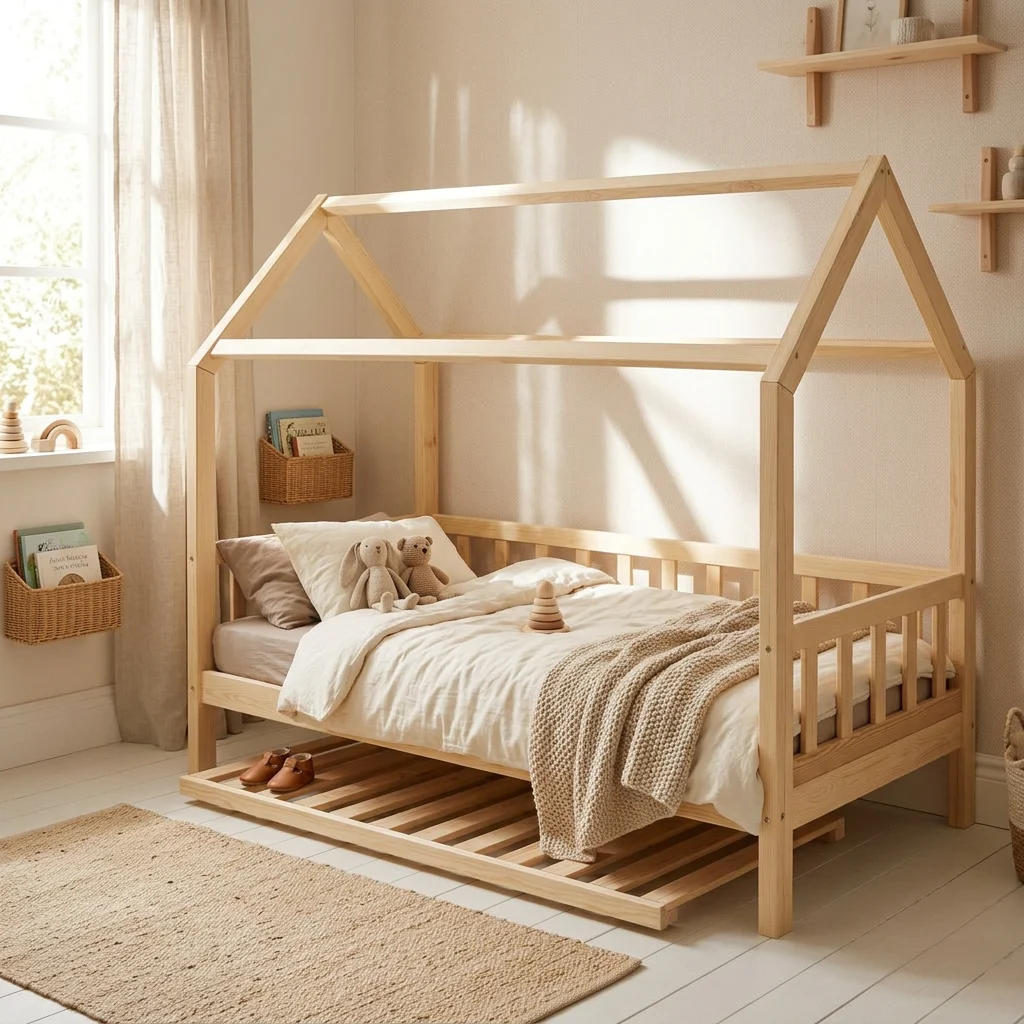
Is your child starting to climb out of their crib, or do they simply need more room to grow? Selecting a high-quality solid wood bed is one of the most significant investments you can make in your child’s health and safety—a piece of furniture designed to last through their childhood and well into their teenage years.
When is it time to transition from a crib?
Most children are ready to move from a crib to a “big kid bed” between the ages of 18 months and 3 years. A clear physical indicator is height: once a child reaches approximately 90 centimeters or begins attempting to climb over the crib rails, the risk of falling becomes a serious safety concern. Beyond physical milestones, it is important to gauge your child’s emotional readiness and interest in a new bed to ensure the transition is as smooth and stress-free as possible.
When planning this move, look for a bed that provides enough space for your child to sleep comfortably and the independence to get in and out on their own. High-quality solid wood furniture offers the necessary stability for active children and remains easy to restore and update as their personal style evolves over time.
Selecting a bed based on developmental stages
As a child grows, their physical requirements and the way they interact with their bedroom change. Age and developmental milestones are the most important factors to consider when choosing the right frame.
Toddlers: A safe and secure transition (1.5–4 years)
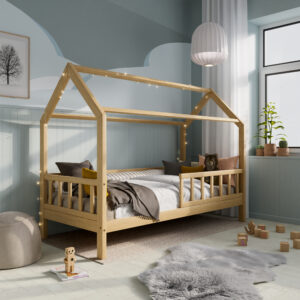
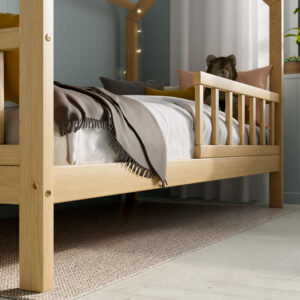
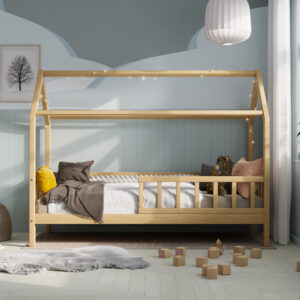
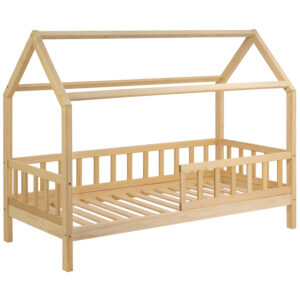
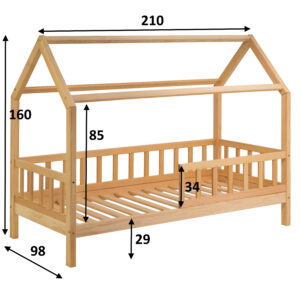
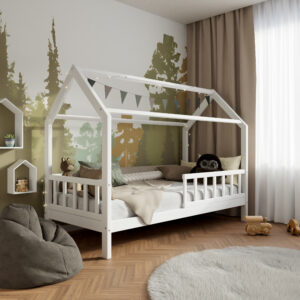
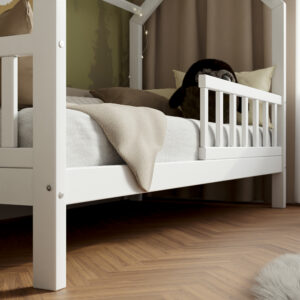
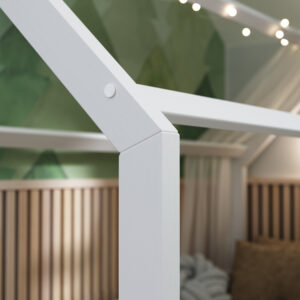
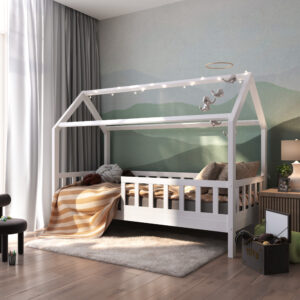
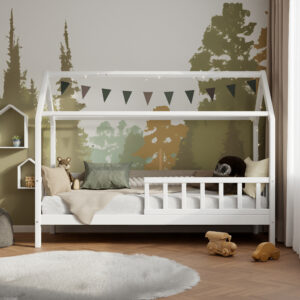
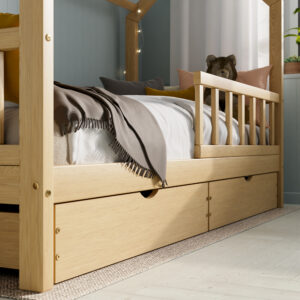
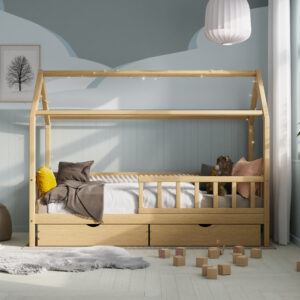
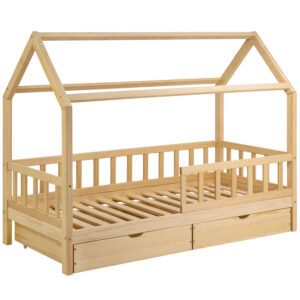
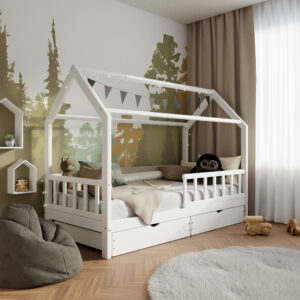
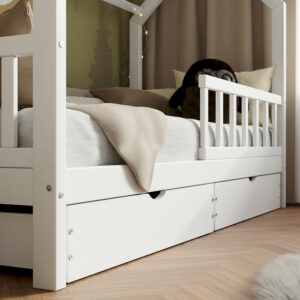
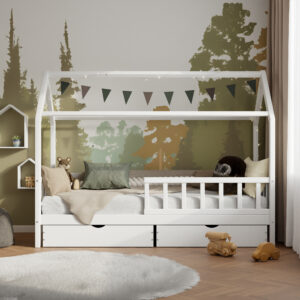
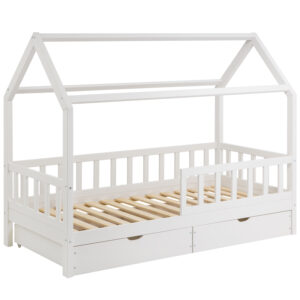
At this stage, safety is the top priority. Key features should include a low frame height and reliable fall protection. Many parents opt for low-profile house beds, which create a cozy, “den-like” atmosphere that encourages imaginative play. To ensure safety, guard rail gaps should be no wider than 6 centimeters to prevent limbs from getting caught, and the mattress should fit snugly within the frame to eliminate dangerous gaps.
School-age children: Focus on functionality (5–10 years)
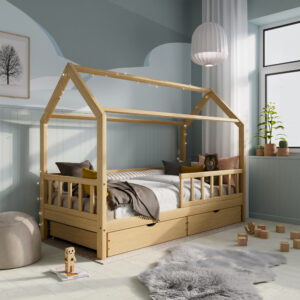
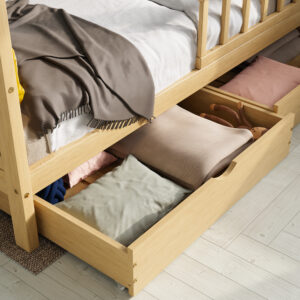
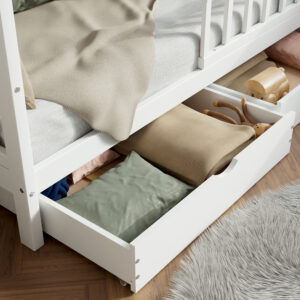
Once a child enters school, the bed often becomes a multi-functional space for reading, relaxing, and playing. This is an ideal time to transition to a full-size 90×200 cm mattress, which will accommodate them comfortably through their teenage years. As the need for storage for toys and school supplies increases, beds with integrated under-bed drawers are a smart way to maximize floor space. Please note that for safety reasons, the top bunk of a bunk bed is only recommended for children aged 6 and older.
Teenagers: Durability and long-term use (11+ years)
For teenagers, structural integrity and weight capacity become the primary concerns. Riverbank’s solid wood beds are designed to support up to 95 kg, ensuring stability during rapid growth spurts. At this age, many children pivot toward minimalist designs and the timeless look of natural materials. To help decide which wood type is right for your home, see our comparison between pine and birch wood.
Safety standards and material quality
There should be no compromise on safety when it comes to children’s furniture. Unlike particleboard or MDF, which often rely on glues that may emit harmful VOCs (volatile organic compounds), solid wood is a clean, natural material. This is a critical consideration for children with allergies or chemical sensitivities.
When evaluating safety, keep the following in mind:
- Non-toxic finishes: Ensure all paints and lacquers are water-based and certified safe for children.
- Stability: The construction must be heavy and stable enough to prevent tipping during active use.
- Bunk bed safety: Guard rails should extend at least 13 cm above the top of the mattress.
- Structural integrity: Glued laminated wood is an excellent choice for bed frames. As discussed in our article on the suitability of glued laminated wood for children’s beds, this material is exceptionally stable and will not warp or crack with changes in indoor humidity.
Pine, birch, or oak: Which wood is the best investment?
The choice of material depends on your budget, the intended lifespan of the piece, and your interior design preferences.
Pine is the most popular choice for children’s furniture because it is warm, inviting, and affordable. It naturally releases phytoncides, which help inhibit bacterial growth and provide a subtle, pleasant scent.
Birch is significantly harder and more impact-resistant than pine, making it a better choice for high-traffic rooms where furniture might be prone to scratches or dents.
Oak is the ultimate choice for those seeking “heirloom” quality. Its extraordinary density and beautiful grain patterns make it unsurpassed in terms of durability and aesthetics.
To complement your choice of bed, consider the overall environment of the room; solid wood wall panels and accents can significantly improve both the warmth and acoustics of a child’s bedroom.
By choosing a solid wood bed, you are investing in a product that adapts to your child’s changing needs. At Riverbank OÜ, our production experience and modern technology ensure that every bed is crafted with the utmost care for its smallest users. Explore our wide selection of children’s beds to find the perfect addition to your home.