



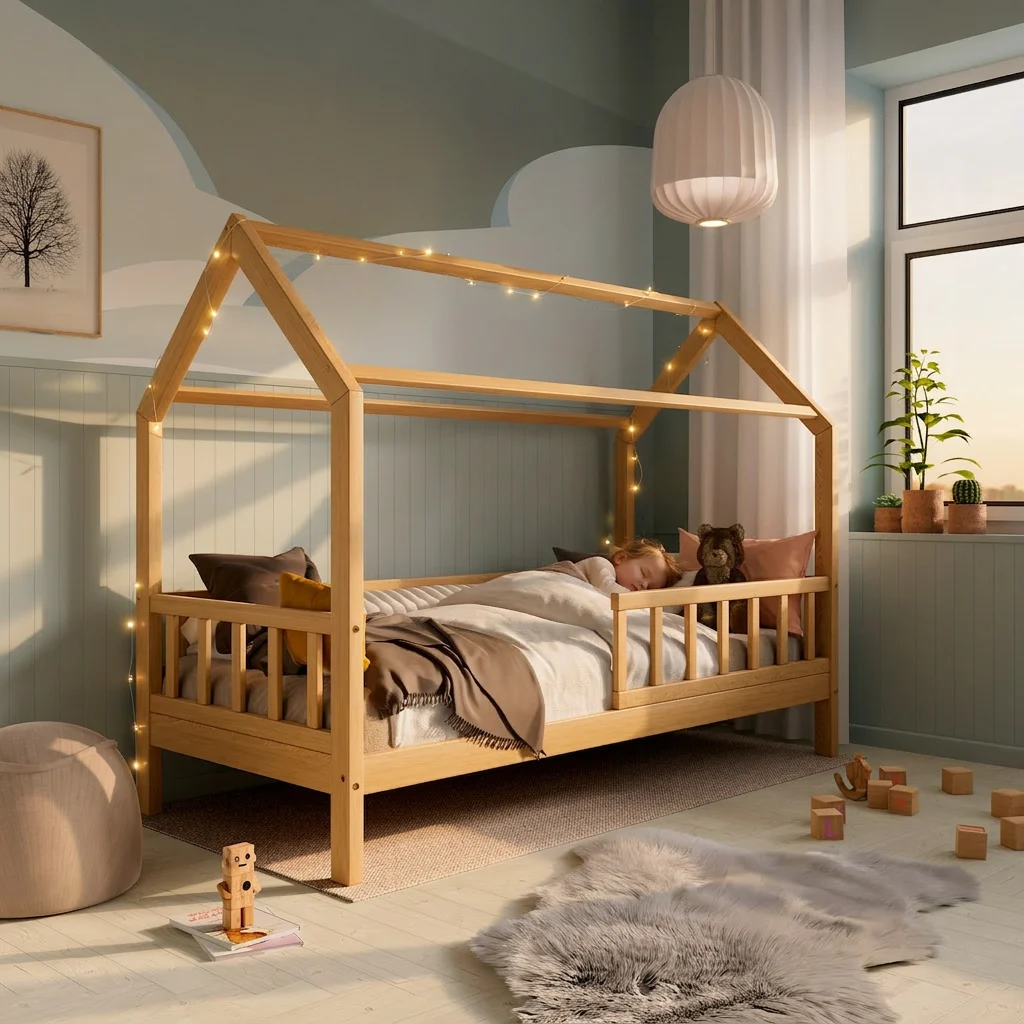
Did you know that young children spend nearly half of their early lives in bed? Because a child’s bedroom is their primary environment for growth and recovery, their bed needs to be more than just a piece of furniture—it must be a certified, secure sanctuary free from hidden health hazards and physical safety risks.
Material Selection and Finish Purity
Solid wood is the gold standard for children’s furniture because it is natural, breathable, and exceptionally durable. However, different wood species offer distinct advantages. Pine is a warm, affordable, and popular choice that adds a sense of coziness to a room. In contrast, hardwoods like birch and oak offer higher density and better scratch resistance—an important consideration for particularly active children. Regardless of the species, the wood must be expertly finished to ensure surfaces are perfectly smooth and free of cracks that could cause splinters.
The finish applied to the wood is just as critical as the timber itself, as children are in constant direct contact with these surfaces. For children’s beds, paints and lacquers must be water-based, non-toxic, and compliant with strict chemical safety standards, such as CPSIA limits for lead and phthalates. Riverbank products utilize only premium, child-safe finishes that do not off-gas harmful volatile organic compounds (VOCs) into your home’s air. To learn more about selecting the right material, explore our guide on the advantages of pine vs. birch in furniture.
Guardrails and Slat Spacing
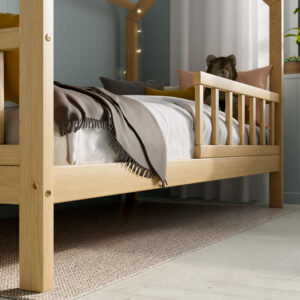
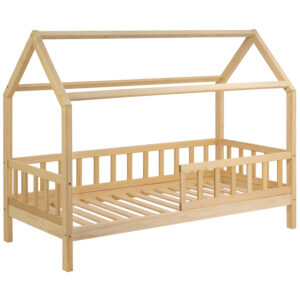
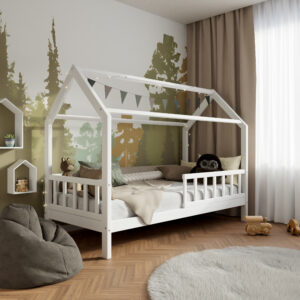
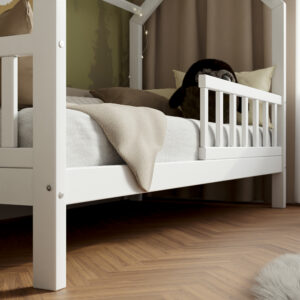
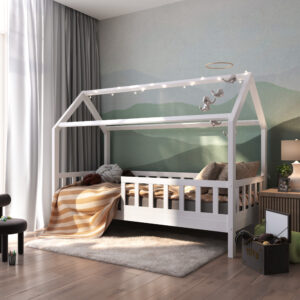
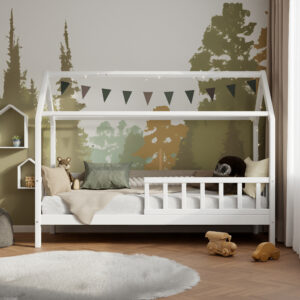
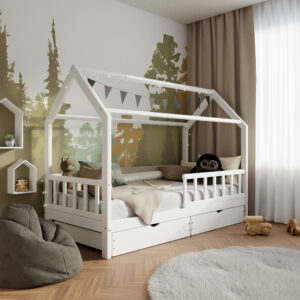
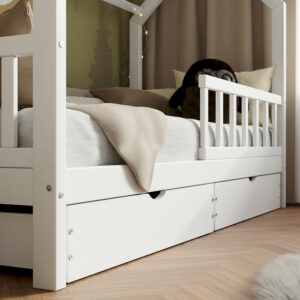
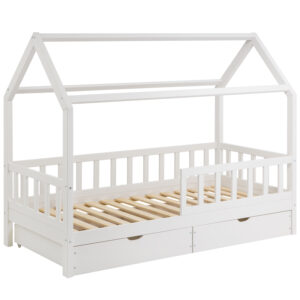
Properly designed guardrails are among the most vital safety features of any child’s bed. Their purpose is twofold: they must prevent the child from falling out of bed while also eliminating the risk of entrapment. If dimensions do not meet strict safety standards, the rail itself can become a hazard.
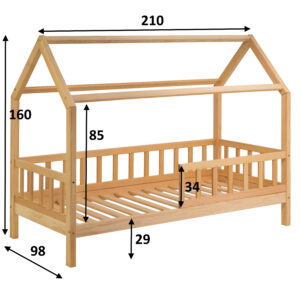
- Slat Spacing: According to international safety standards (such as ASTM F1821), the distance between vertical slats or spindles must not exceed 6 centimeters. This prevents a child’s head or limbs from becoming dangerously stuck.
- Rail Height: To be effective, safety rails should extend at least 12–15 cm above the top of the mattress. This ensures that even as a child moves in their sleep, they cannot accidentally roll over the edge.
- Stability: Rails must be structurally integrated into the bed frame with zero “play” or wobbling, ensuring they remain secure even if a child leans or pushes against them.
Structural Integrity and Weight Capacity
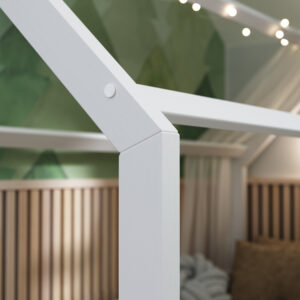
A child’s bed is rarely used only for sleeping; it frequently doubles as a playground or a cozy spot for reading bedtime stories with a parent. Consequently, structural stability is a key indicator of quality. A high-quality solid wood bed should be able to withstand energetic play and the weight of an adult without creaking, shifting, or wobbling.
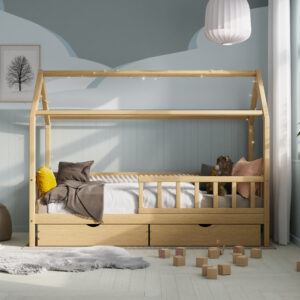
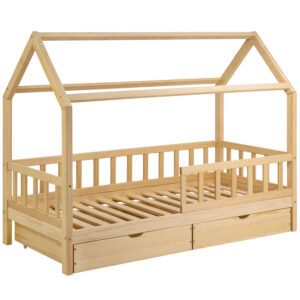
Riverbank’s house beds are designed with a load capacity of up to 95 kg, achieved through precision joinery and premium wood selection. Any looseness in the joints is a red flag for poor assembly or manufacturing, which can lead to safety issues over time. By opting for glued laminated timber components, you ensure the bed remains stable. Unlike traditional solid planks, laminated timber is less prone to “movement” or warping caused by fluctuations in temperature and humidity, allowing the bed to maintain its strength for years to come.
Mattress Compatibility and Precise Dimensions
Safety starts with a proper foundation—specifically, the fit between the bed frame and the mattress. The mattress must fit snugly within the frame, leaving no dangerous gaps around the perimeter. As a rule of thumb, if you can fit more than two fingers between the mattress and the bed frame, the gap is too large and poses a risk of limb entrapment.
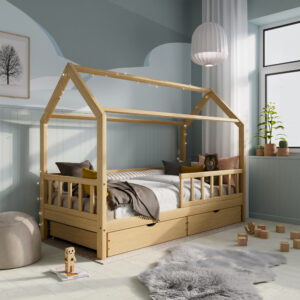
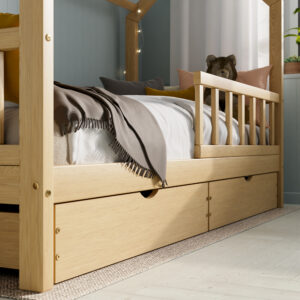
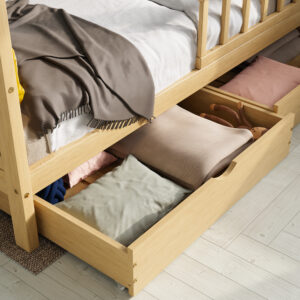
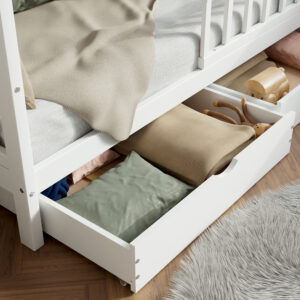
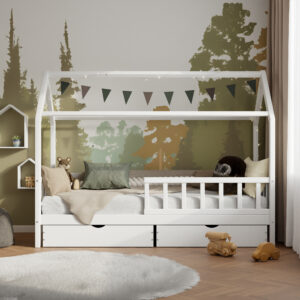
As your child grows, investing in a standard-sized bed (such as 90×200 cm) is often the most practical choice, as it can serve them well into their teenage years. For those looking to maximize space, models equipped with under-bed drawers are an excellent solution for organizing bedding and toys. This keeps the floor clear of tripping hazards, creating a safer overall environment in the nursery.
Certifications and Safety Standards
Before finalizing your purchase, verify that the manufacturer adheres to recognized safety protocols. In Estonia and across Europe, specific certifications confirm that a product has undergone rigorous testing for both structural durability and chemical safety. An FSC® certification is an additional mark of quality, ensuring the wood is sourced from responsibly managed forests.
Choosing a child’s bed is a significant responsibility where quality should never be compromised. For more professional advice, we recommend reviewing these tips for choosing solid wood products to find furniture that is both aesthetically pleasing and built to last for generations. By prioritizing a bed that meets all safety requirements, you are investing in your child’s health and your own peace of mind.
If you are looking for a safe, durable, and beautifully crafted sleeping area for your child, explore Riverbank’s wide selection of children’s beds and choose local quality you can trust.