




Did you know that incorrect bed dimensions or improperly spaced rails can pose a serious safety risk to your child? Choosing the right solid wood bed is a crucial decision that must balance a child’s physical development and room layout with rigorous health and safety requirements.
Standard Dimensions and Mattress Compatibility
The children’s furniture industry follows specific standard dimensions to ensure parents can easily find compatible mattresses and bedding. When selecting a size, consider both your child’s current height and their projected growth over the next few years.
- 70 × 140 cm: The ideal first bed after transitioning from a crib. This compact size provides a sense of security for toddlers and typically accommodates children up to age five or six.
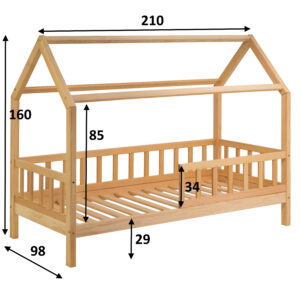
- 80 × 160 cm: Often considered the “sweet spot” of children’s beds, this size offers enough room for a preschooler to grow without overwhelming the floor space of a smaller bedroom.
- 90 × 200 cm: The standard single bed size and the most sustainable long-term choice. This size is suitable for children from their first year of school through their teenage years and into adulthood.
Riverbank offers a wide range of children’s beds in various sizes, all crafted from durable pine. It is essential to ensure that the mattress fits precisely within the bed frame. A gap of more than 3 cm (approximately two fingers) between the mattress and the frame creates a dangerous void where a child’s limbs could become trapped during sleep.
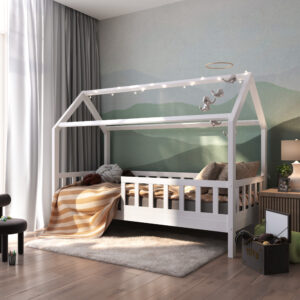
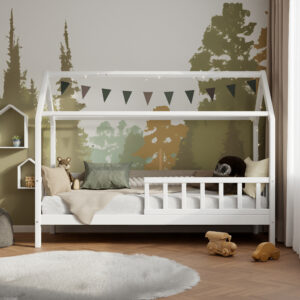
Choosing a Bed Based on Developmental Stages
When selecting a bed, length is only part of the equation; you must also consider how the furniture supports a child’s independence. Choosing a children’s bed for different age groups requires shifting your focus according to their specific developmental needs.
- Toddlers (18 months to 3 years): This is the primary age for transitioning from a crib to a toddler bed. The focus here is on a low profile and effective fall protection. Once a child reaches a height of 90 cm, moving to a low bed is recommended to prevent the risks associated with climbing over high crib rails.
- Preschool and Primary School: At this stage, the bed becomes a multi-functional space for reading and playing as well as sleeping. A 90 × 200 cm bed is a wise investment, ensuring the child won’t outgrow the furniture in just a few years.
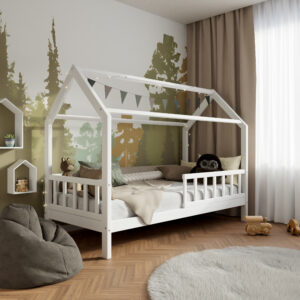
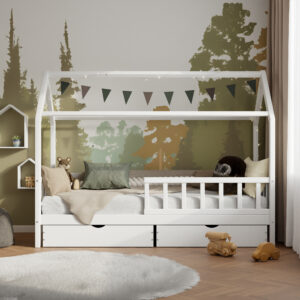
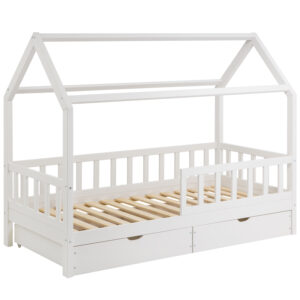
- Teenagers: Strength and load-bearing capacity become critical. Riverbank’s solid wood house beds are tested to support up to 95 kg, providing stability even during a teenager’s rapid growth spurts.
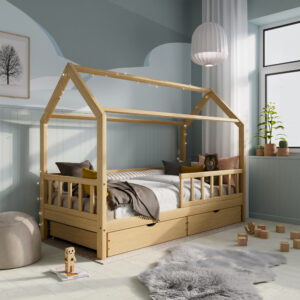
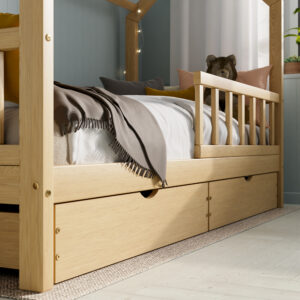
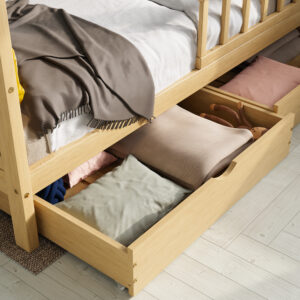
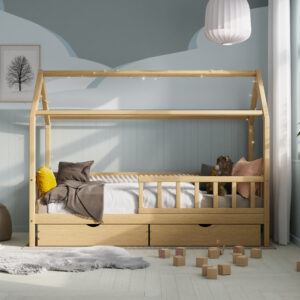
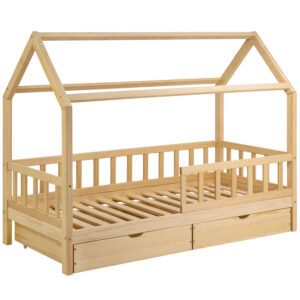
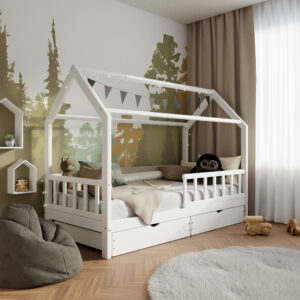
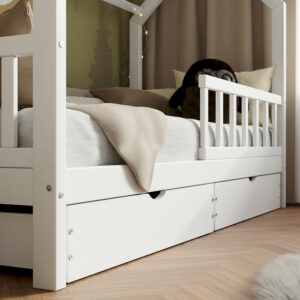
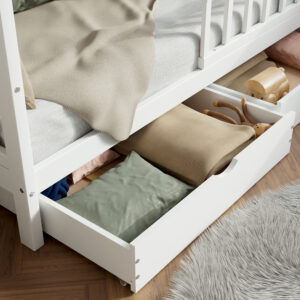
To maximize functionality in smaller rooms, consider models with integrated drawers. These provide ample storage for bedding or toys, helping to keep the child’s personal space organized.
Critical Safety Standards and Materials
Solid wood is the gold standard for children’s furniture because it is natural, breathable, and exceptionally durable. However, safety depends on strict adherence to technical details. According to international standards, solid wood children’s bed safety requirements must include:
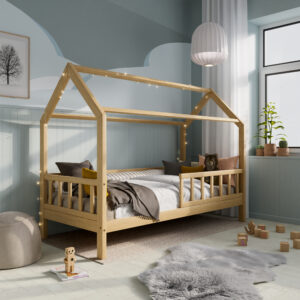
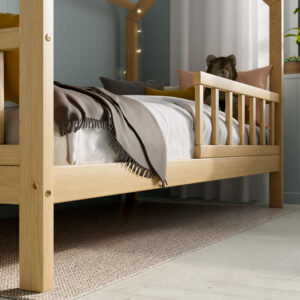
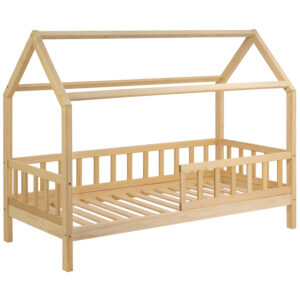
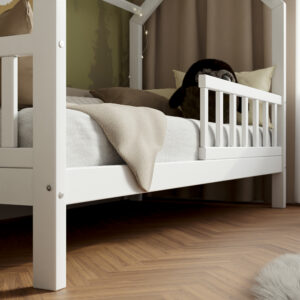
- Rail Spacing: The distance between safety rails or slats must not exceed 6 cm to prevent a child’s head or limbs from becoming trapped.
- Guardrail Height: The safety rail should extend at least 12–15 cm above the top surface of the mattress to effectively prevent the child from rolling out.
- Non-Toxic Finishes: All paints and lacquers must be water-based and free from toxic chemicals like lead and phthalates. At Riverbank, the color selection and finishing for solid wood children’s beds are handled using only certified, health-friendly products.
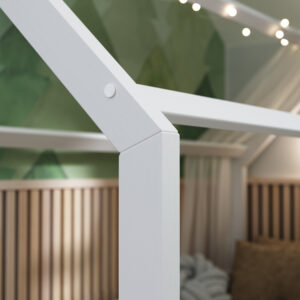
- Material Integrity: Laminated solid wood (glulam) used in bed construction is often more resistant to moisture and temperature fluctuations than massive wood, significantly reducing the risk of cracks or warping. You can find more detailed information in our guide on the suitability of laminated wood for children’s bed production.
The Long-Term Value of Quality Wood Furniture
Investing in high-quality solid wood is a sustainable choice that lasts for decades. Unlike particle board, solid wood is easy to restore; the surface can be sanded and refinished if style preferences change or signs of wear appear. Furthermore, children’s rooms with solid wood furniture promote a healthy indoor climate, bringing a natural warmth to the home that synthetic materials cannot match.
Riverbank OÜ brings over 10 years of woodworking expertise to every piece we create, offering safe and flexible solutions for every family. By choosing a bed that meets both standard dimensions and rigorous safety requirements, you are providing a secure, healthy environment for your child to rest and grow.
Explore our collection of solid wood beds to find a durable, beautiful solution that will serve your family for years to come.