



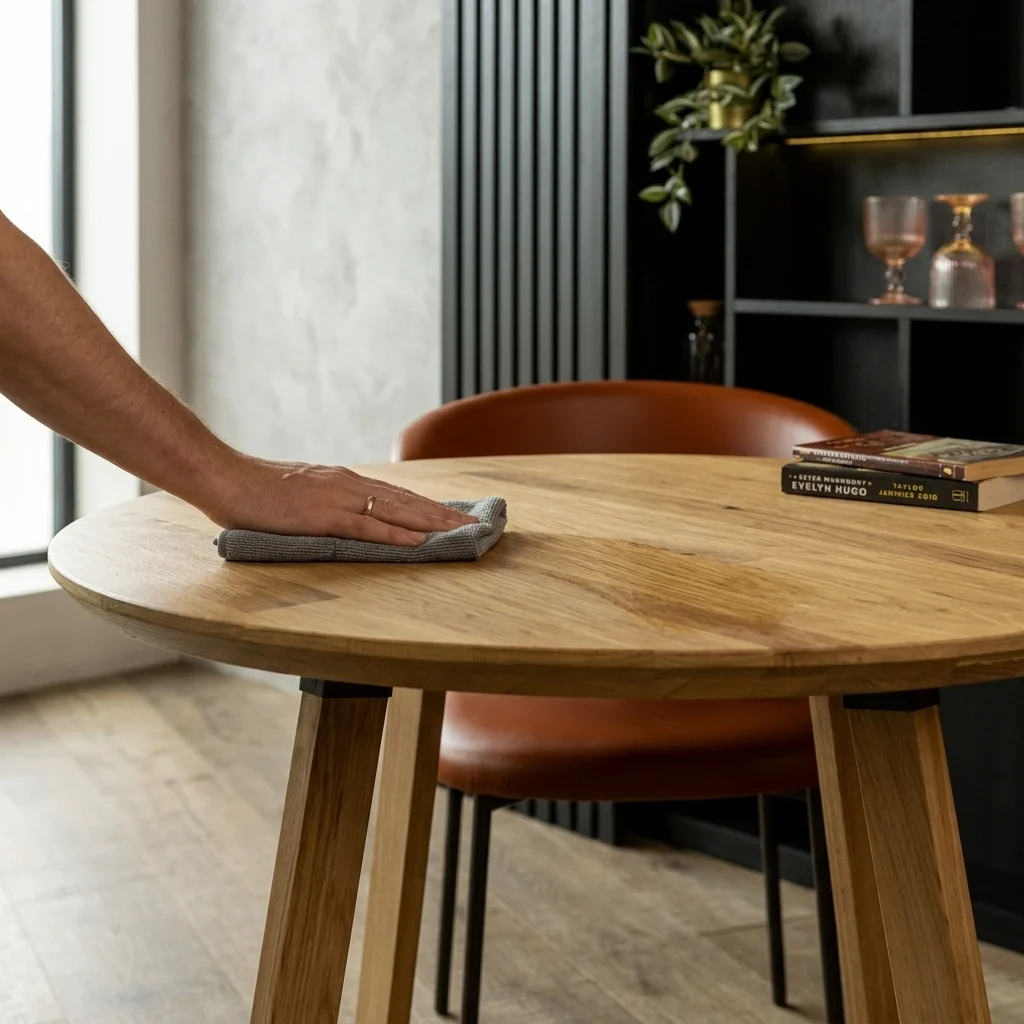
Did you know that a properly maintained solid wood dining table can last for generations? As a “living” material, wood responds to its environment, requiring mindful attention to ensure its long-lasting beauty and durability.
Solid wood is a rewarding material because, unlike veneer or laminate, it can be fully restored. At Riverbank, our experience shows that whether your table is made of birch or oak, the right techniques can prevent moisture damage, stains, and cracking. By following simple maintenance routines, your table will remain a stunning centerpiece in your home for decades to come.
Daily Cleaning and Dusting
When cleaning a solid wood surface, the “less is more” principle applies. For daily care, dusting with a soft, dry cloth is usually sufficient—always wipe in the direction of the wood grain. This movement prevents micro-scratches and keeps the natural texture clean. If the table requires a deeper clean after a meal, use a slightly damp microfiber cloth.
If necessary, you can use a mild, pH-neutral soap solution, but it is crucial to dry the surface immediately. Standing water should never be left on the wood, as it can seep into the pores, damaging the finish or causing the timber to swell. Avoid harsh chemicals, ammonia-based glass cleaners, and abrasive scrubbing pads, all of which can scratch or degrade the protective finish.
We also recommend avoiding silicone-based polishes. These products create a buildup on the surface that makes future maintenance—such as re-oiling or re-lacquering—extremely difficult, as the new finish will not adhere properly to a silicone-coated surface.
Protection from Heat, Moisture, and Sunlight
Wood is a hygroscopic material, meaning it absorbs and releases moisture based on its environment. While the advantages of a glulam dining table include excellent structural stability, even the best craftsmanship needs protection from extreme conditions. The optimal relative humidity for wood furniture is between 35% and 45%. Excessively dry air, particularly during the winter heating season, can cause wood to shrink and develop small cracks.
Protecting your furniture from heat is another critical factor. Never place hot pots, pans, or plates directly on the wood; always use trivets or placemats. Direct heat can leave permanent white rings on lacquered surfaces or melt the oil layer, creating uneven patches. It is also wise to use coasters under glasses and mugs to prevent condensation from leaving marks.
Sunlight also influences how a table’s appearance evolves. UV rays naturally change the pigment of the wood: oak tends to turn more golden and deepens in color, while birch may take on a yellowish tint. To ensure the wood ages gracefully, avoid placing the table in direct, intense midday sun for long periods, or rotate the table occasionally so the color remains uniform across the entire surface.
-
-
-40%
Select options This product has multiple variants. The options may be chosen on the product page
- Dining Tables
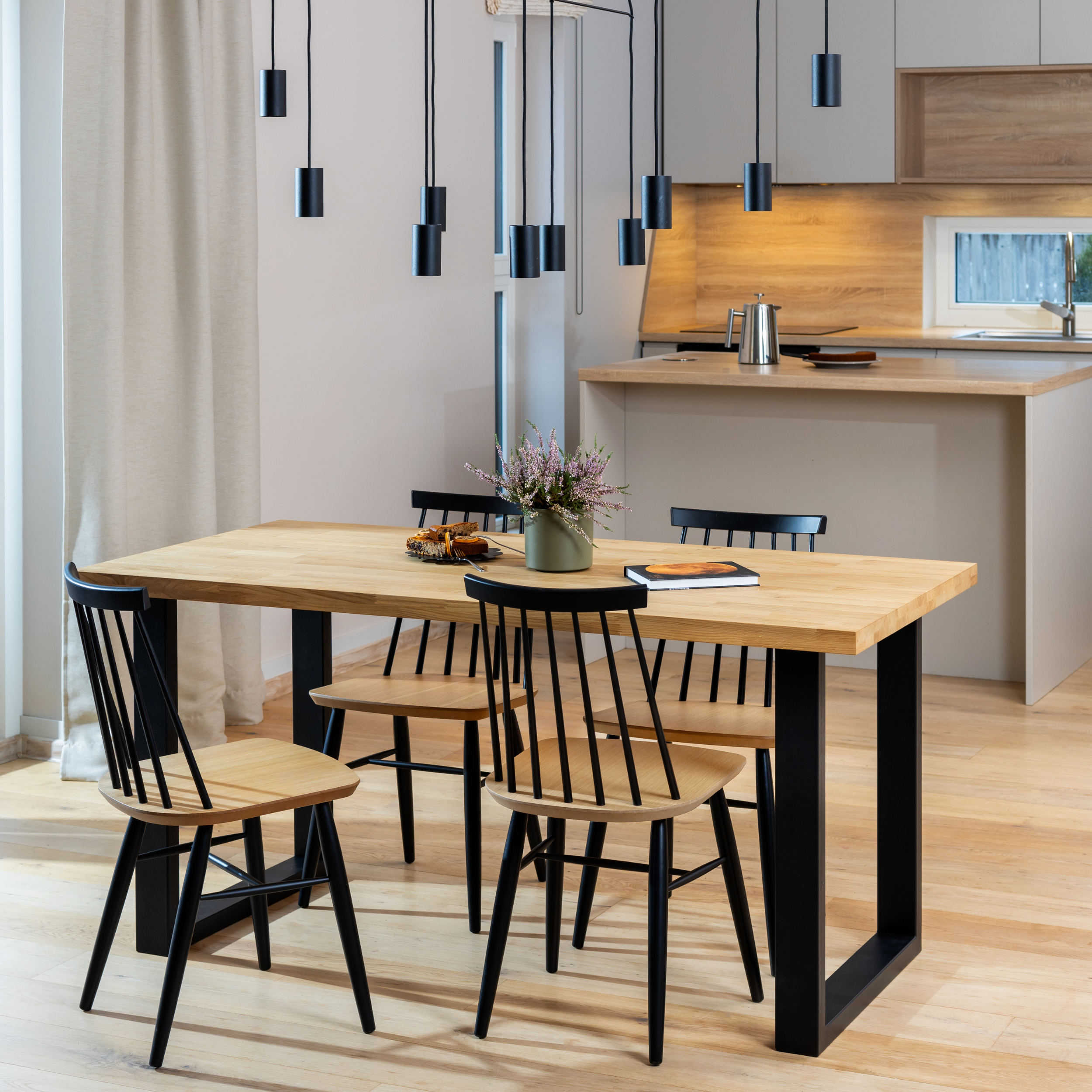
Dining Table LIIV
- Price range: 372.60€ through 399.60€
-
-
-
-
-
-
-40%
-
-
-40%
Select options This product has multiple variants. The options may be chosen on the product page
- Dining Tables
Dining Table MERI
- Price range: 372.60€ through 399.60€
-
-
-
-
-
-
-40%
-
-
-40%
Select options This product has multiple variants. The options may be chosen on the product page
- Dining Tables
Dining Table PÄRL
- Original price was: 559.00€.335.40€Current price is: 335.40€.
-
-
-
-
-
-
-40%
Maintenance Based on the Finish
How you maintain your table depends largely on whether it is oiled or lacquered. Before starting any maintenance, it is helpful to review our comparison of oiled vs. lacquered dining tables to understand the specific needs of each finish.
Refreshing Oiled Surfaces
Oil penetrates deep into the wood fibers, resulting in a natural, matte finish that allows the wood to “breathe.” An oiled table requires regular nourishment to maintain its water-repellent properties. You can easily test the finish with a water drop: place a small drop of water on the table—if it beads up, the protection is intact. If the water soaks in and leaves a dark spot, it’s time for a fresh coat of oil.
Generally, we recommend re-oiling dining tables once or twice a year, depending on use. Keep in mind that different wood species behave differently; birch is slightly more sensitive than oak and may require more frequent care. For more on these differences, see our guide on birch vs. oak dining tables.
Caring for Lacquered Surfaces
Lacquer creates a sealed protective barrier that is highly resistant to stains and moisture. For daily use, lacquered surfaces are easier to maintain since they don’t require periodic oiling. However, if the surface is damaged by deep scratches, it is significantly harder to repair than oiled wood. Lacquered surfaces should never be waxed or oiled; regular cleaning with a soft cloth and gentle cleaners is all that is needed.
How to Repair Minor Damage
One of the greatest benefits of solid wood furniture is that it is fully restorable. While a deep scratch can ruin veneered furniture, restoring solid wood at home is entirely possible with the right tools. This sustainability is one reason why wood remains a premium choice for the home.
Light surface defects and scratches can be removed from an oiled surface using fine-grit sandpaper (P220–P320), always sanding with the grain. After sanding, wipe away the dust and apply a new coat of maintenance oil to the area. If a liquid has left a stain, this method can often fix the problem. For more intensive repairs, our oak worktop maintenance guide provides detailed instructions on wood restoration.
Regular, mindful care doesn’t just preserve the table’s appearance; it extends its lifespan by decades. By following these simple cleaning and protection techniques, your dining table will remain a beautiful focal point for generations. If you are looking for a new, high-quality table, explore our full selection of dining tables.