




Unsure whether a round or rectangular coffee table is the better fit for your living room? Picking the wrong shape can make navigating the room awkward and disrupt its visual balance. The right choice comes down to your sofa layout, available walkway clearance, and how your family uses the space every day.
Sofa Type and Layout Determine Table Shape
Your sofa and seating layout are the primary factors when choosing a coffee table shape. As the functional centerpiece of your living area, a coffee table should complement your furniture arrangement and remain within easy reach from every seat.
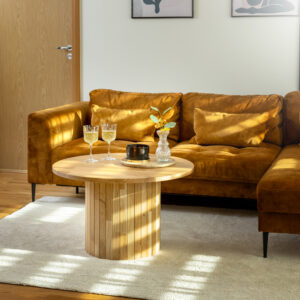
- Sectionals, L-shaped, and U-shaped sofas: A round coffee table nestles naturally into the center of a sectional. Its soft, curved silhouette fills the interior space proportionately while leaving plenty of legroom. Plus, a round table can be reached easily from both the corner wedge and the longer sides.
- Classic straight sofas: Positioned in front of a standard straight couch, a rectangular coffee table adds structural harmony and visual balance. Its elongated surface runs parallel to the sofa, ensuring drinks, books, and remotes are never out of arm’s reach, even for those sitting on the ends.
As a general rule of thumb, a coffee table’s length or diameter should measure roughly two-thirds the length of your sofa’s seating area. For L-shaped sofas, calculate this based on the main seating section. Table height should sit flush with your sofa cushions or up to 2–3 cm lower. For detailed advice on getting your proportions right, read our guide on choosing coffee table height.
Clearance Space and Surface Practicality
Your room’s footprint and traffic pathways dictate how easily you can move around the space. A well-proportioned coffee table should enhance daily living, never block walkways or make the room feel cluttered.
- Small or high-traffic rooms: In compact or busy living areas, a round coffee table keeps movement fluid. Without sharp corners, you can pass by effortlessly without worrying about bumping your knees or thighs.
- Maximum usable surface area: If you need a surface that can hold snack platters, laptops, and board games all at once, a rectangular table offers significantly more usable space than a round table of similar width. Its linear profile also helps anchor the seating area in larger rooms.
To maintain comfortable ergonomics, leave about 35–50 cm between the edge of the sofa and the coffee table—just enough space to stretch your legs without feeling distant from your drink. For major walkways around the rest of the table, aim for at least 60–75 cm of clear space to avoid foot-traffic bottlenecks.
Safety and Stability in Homes with Children
If you have toddlers or pets, safety becomes a top priority when selecting living room furniture. Sharp wood corners situated along main thoroughfares invite painful bumps and bruises during everyday play.
A round coffee table is inherently safer for kids because it eliminates sharp edges entirely. However, structural stability is just as important when picking a round design. Models supported by a single pedestal base can tip if a toddler leans heavily on the rim. To maximize safety, opt for a round design with a weighted base or a sturdy multi-leg base.
If you prefer a rectangular design, look for models crafted with softly rounded corners. A traditional four-legged base or an integrated box frame will provide maximum stability against accidental pushes.
Interior Design Style and Visual Balance
A coffee table acts as a visual anchor, pulling surrounding design elements together into a cohesive look. Read more about solid wood coffee table designs to explore different styles for your home.
- Soft, organic aesthetics: Round tables break up rigid architectural lines—such as boxy cabinetry, window frames, and geometric rugs. A round silhouette blends effortlessly into Japandi, Scandinavian, and modern organic interiors.
- Structured, classic aesthetics: A rectangular coffee table brings architectural structure and visual order to a room. It is a timeless, dependable choice for classic, industrial, or minimalist interiors where clean geometric lines dominate.
Regardless of shape, your material choice dictates the table’s longevity and care requirements. For a complete breakdown, explore our coffee table material comparison, where we compare the practical properties of wood, glass, metal, and stone.
Benefits of Solid Wood Coffee Tables and Finding the Right Model
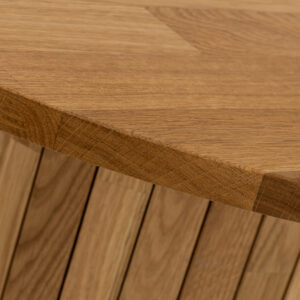
Solid wood brings natural warmth, character, and lasting quality to any living room. European oak, for example, features a Janka hardness rating of around 1,360 lbf, making it exceptionally resistant to everyday wear, dents, and scratches. At Riverbank OÜ, we craft premium solid wood coffee tables and edge-glued panels using oak, birch, and pine—offering custom dimensions tailored to your exact floor plan.
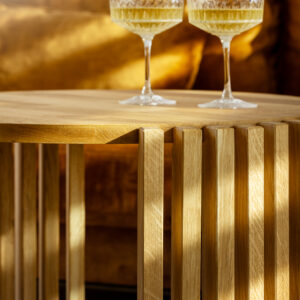
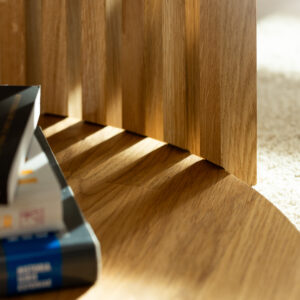
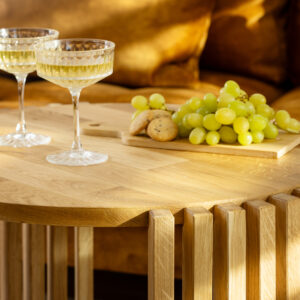
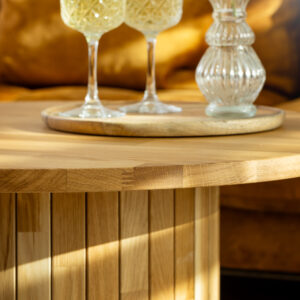
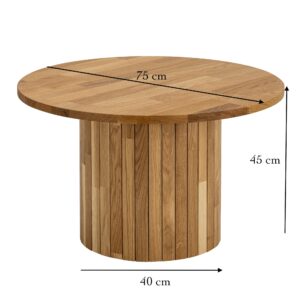
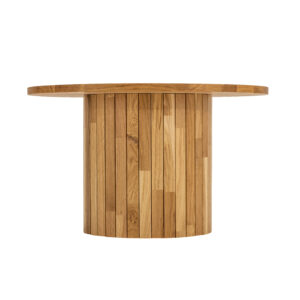
If you love a soft, rounded aesthetic that pairs natural timber with sleek metal framing, explore our popular round coffee tables and nesting sets:
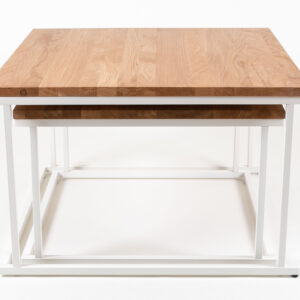
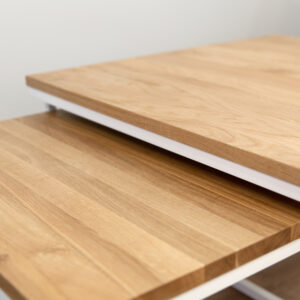
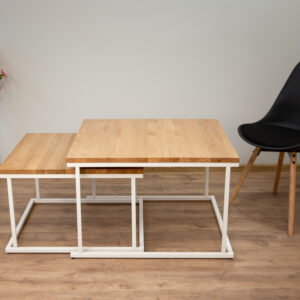
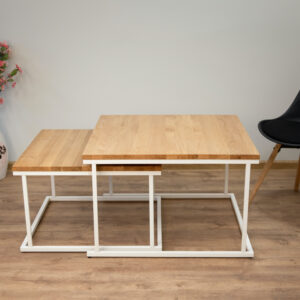
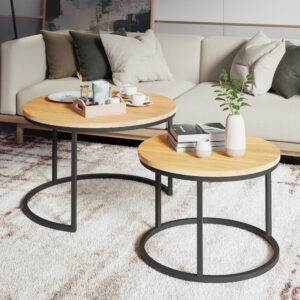
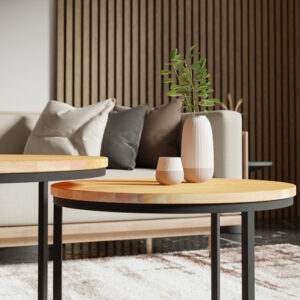
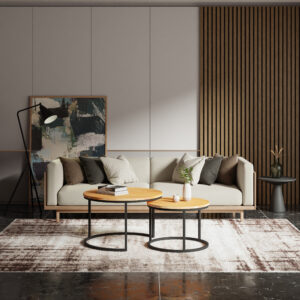
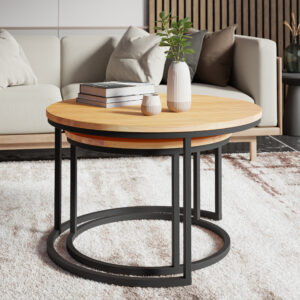
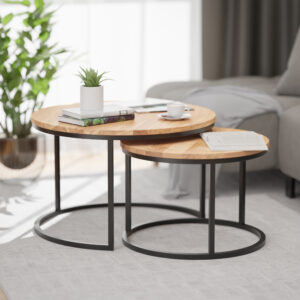
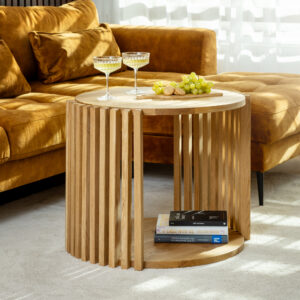
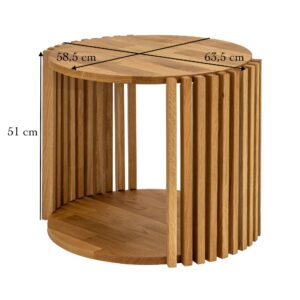
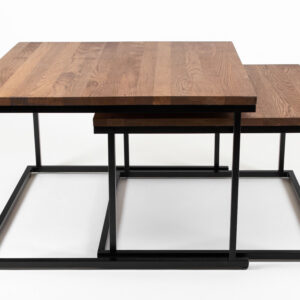
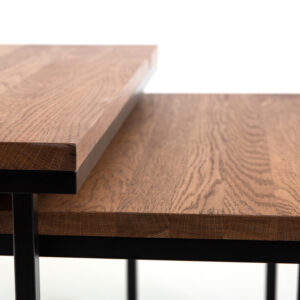
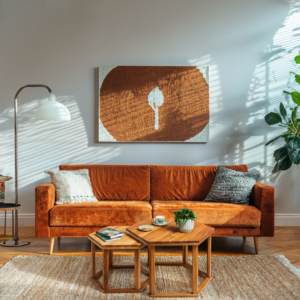
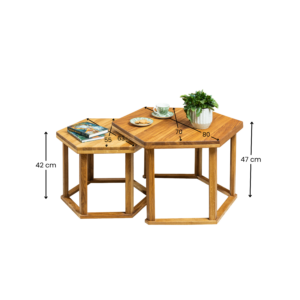
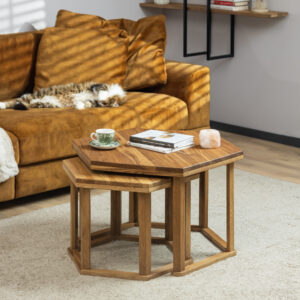
If you favor geometric lines and versatile surface area, we offer both natural and dark-stained solid wood rectangular tables and functional sets:
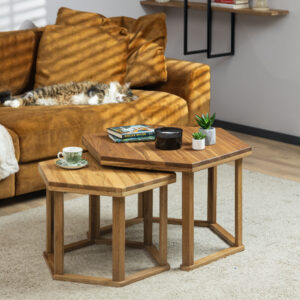
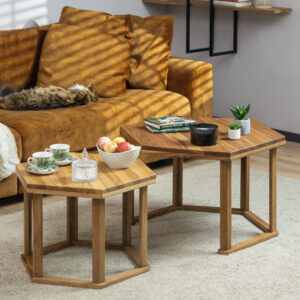
Ultimately, deciding between a round or rectangular coffee table comes down to your sofa layout, your household’s daily habits, and your safety requirements. Take accurate measurements, preserve open walkways, and invest in a solid wood table built to last for decades.
Browse our full collection online under coffee tables. To keep your real wood furniture looking pristine over time, check out our guide on best practices for maintaining coffee tables. Need custom dimensions or a bespoke tabletop design? Contact our team—we’ll build it to your exact specifications.