



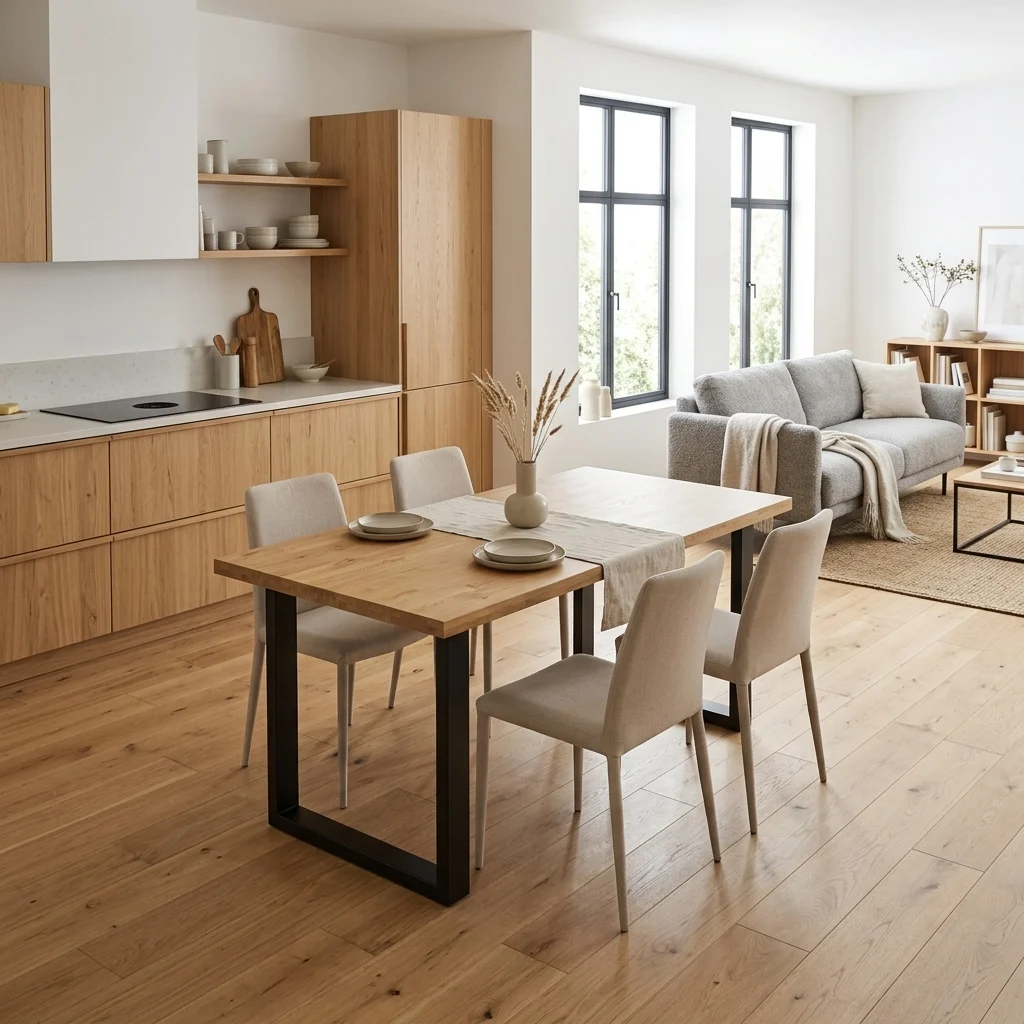
Designing a dining area in an open-plan home can feel like a spatial balancing act. Sitting between the kitchen and living room, your dining table needs to accommodate everyday family meals, blend seamlessly with your interior aesthetic, and leave walkways clear for effortless foot traffic. Here is a practical guide to finding a table that balances scale, style, and everyday functionality.
Dimensions and Walkway Clearances
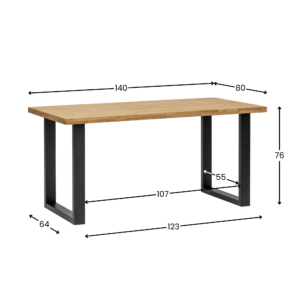
In an open-plan layout, choosing the right dining table involves more than measuring the tabletop itself—the surrounding space is just as critical. Leave at least 90–91 cm of space between the edge of the table and any adjacent wall or piece of furniture so chairs can be pulled out comfortably. If the area behind the table serves as a primary walkway between the kitchen and living room, increase that distance to 107–112 cm to keep traffic moving freely.
For comfortable seating, budget roughly 60 cm of width per person along the table’s edge, allowing extra space if you use wider dining chairs or armchairs. Standard dining tables range from 71 to 76 cm in height, offering comfortable legroom for most dining chairs.
To test how a table will feel in your space before buying, try this simple trick: outline the intended dimensions on your floor using painter’s tape. This visual reference makes it easy to assess spatial proportions and check walkway clearances in your daily routine.
Choosing a Table Shape for Your Room’s Geometry
A table’s silhouette directly influences visual balance and social dynamics within an open floor plan. Selecting the right shape helps connect distinct functional zones while making the most of your available floor space:
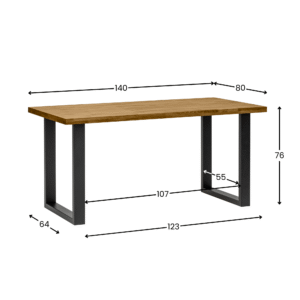
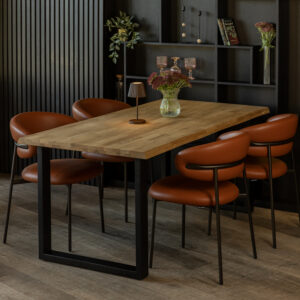
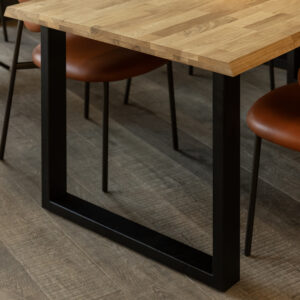
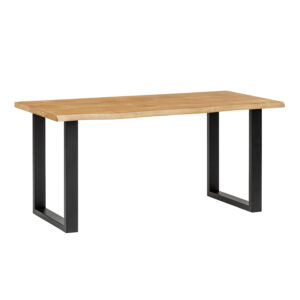
- Rectangular dining tables: Ideal for elongated rooms and open-plan layouts. Placing a rectangular table parallel to a kitchen island or primary countertop creates clean, modern sightlines. For a household of four to six people, a length of 140–180 cm works exceptionally well. Four sturdy legs provide maximum stability, especially for heavier solid wood tops.
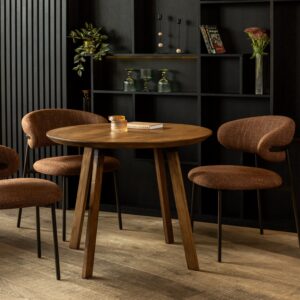
- Round dining tables: Perfect for square areas or smaller footprints. A solid wood round dining table softens rigid architectural lines, improves room flow by eliminating sharp corners, and fosters easier conversation by keeping everyone facing one another.
- Oval and square tables: Oval tables offer the seating capacity of a rectangle alongside soft, rounded corners—a great option for families with young children. Square tables provide a cozy, balanced solution for seating two to four people comfortably.
Matching Materials and Interior Design
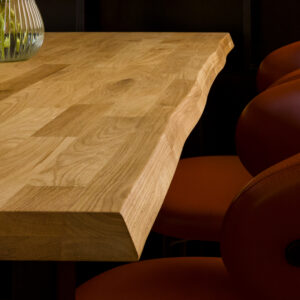
For a dining table to serve as a natural bridge between cooking and relaxing areas, its materials should complement your broader design scheme. Repeating wood tones and finishes across zones reduces visual noise, binding distinct spaces into a cohesive interior. Solid wood adds organic warmth, unique grain patterns, and enduring value to open-plan spaces.
When choosing a wood species, consider both your lifestyle and aesthetic preferences. Oak provides exceptional density, wear resistance, and a timeless look, whereas birch offers a lighter, smoother finish suited to contemporary Scandinavian interiors. Read our detailed comparison of birch and oak dining tables or explore our guide on choosing wood for your dining table to find the right material for your home.
Surface finishes also affect both long-term appearance and daily upkeep. When weighing an oiled vs. lacquered dining table, note that natural wood oil brings out the texture of the grain and allows for easy spot-repair of minor surface scratches. Lacquer, by contrast, forms a tougher protective seal against spills. Re-oiling a table once or twice a year keeps natural wood in prime condition—explore step-by-step care techniques in our solid wood dining table care guide.
Defining the Dining Area with Lighting and Rugs
In a large open-plan setting, subtle visual anchors help ground the dining area, creating an inviting nook within the broader space:
- Rugs and textiles: An area rug under the dining table should extend at least 60 cm past the edges of the tabletop on all sides. This allows chair legs to remain on the rug even when pulled back for seating. Center the rug under the dining table itself rather than aligning it with the room as a whole.
- Pendant lighting: Choose a light fixture with a diameter roughly 1/2 to 2/3 the width of your dining table to maintain balanced proportions. Hang the fixture directly over the center of the table, positioning the bottom of the light 70–90 cm above the tabletop.
Durable Solid Wood Dining Tables from Riverbank
Material stability is essential in open-plan living, where cooking heat and moisture can affect timber. Riverbank tabletops are crafted using high-quality glued laminated timber (edge-glued panels), which offers superior structural stability and resists temperature and humidity shifts better than wide solid slabs. Read more about the benefits of glued laminated timber dining tables.
Explore our collection of solid wood dining tables to find a durable, functional, and beautifully crafted piece for your open-plan home:
-
-
-40%
Select options This product has multiple variants. The options may be chosen on the product page
- Dining Tables
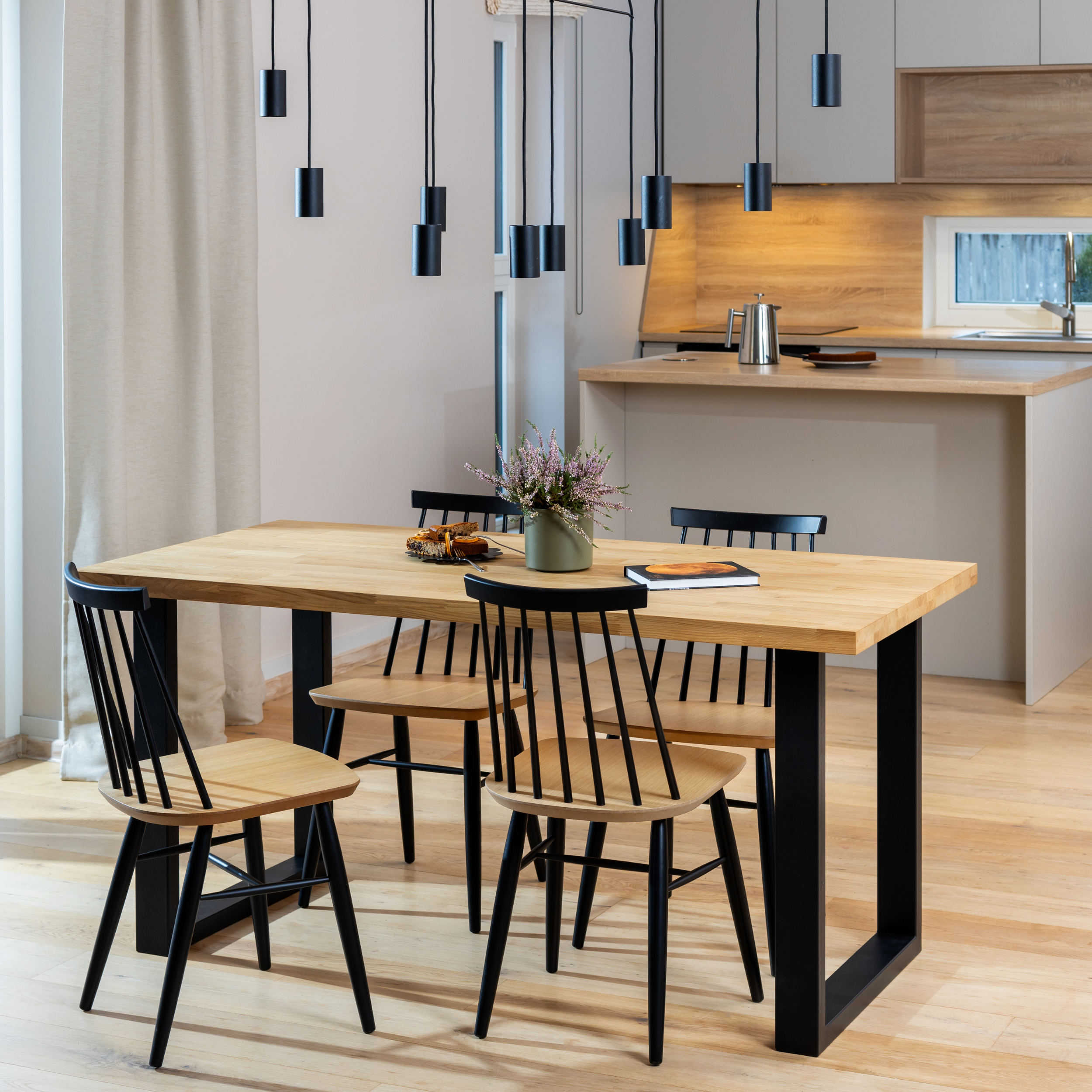
Dining Table LIIV
- Price range: 372.60€ through 399.60€
-
-
-
-
-
-
-40%
-
-
-40%
Select options This product has multiple variants. The options may be chosen on the product page
- Dining Tables
Dining Table MERI
- Price range: 372.60€ through 399.60€
-
-
-
-
-
-
-40%
-
-
-40%
Select options This product has multiple variants. The options may be chosen on the product page
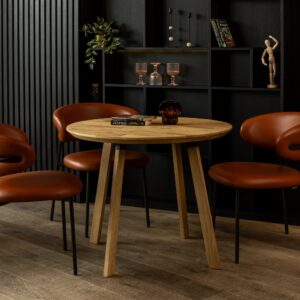
- Dining Tables
Dining Table PÄRL
- Original price was: 559.00€.335.40€Current price is: 335.40€.
-
-
-
-
-
-
-40%
A thoughtfully sized dining table seamlessly connects kitchen practicality with living room comfort, turning every meal into a pleasure. If you need custom dimensions or advice on selecting the right timber panel, contact our team at +372 509 9151 or browse our range online at Riverbank.