



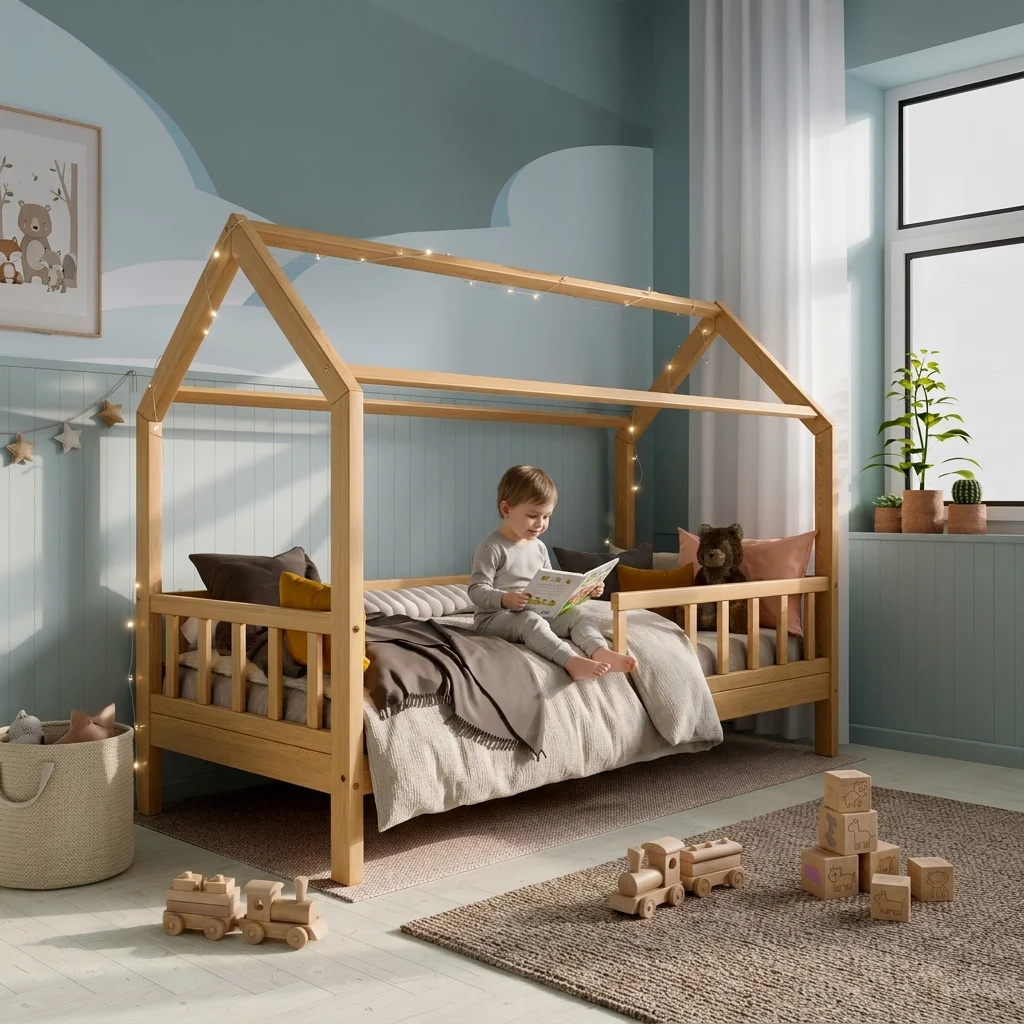
Looking for a child’s bed that combines safety, durability, and a sense of play? A house bed turns any bedroom into a cozy sanctuary where sleep and imaginative play go hand in hand. However, picking the right model means looking closely at dimensions, construction materials, and essential safety features.
Child’s Age and Recommended Bed Dimensions
Moving from a crib to a big-kid bed is a major step toward a child’s independence. According to the American Academy of Pediatrics (AAP), parents should consider making the switch once a toddler reaches a height of around 89 cm (35 inches) or begins attempting to climb out, as falling risks increase significantly.
Select your bed size based on your child’s age, height, and the layout of the room:
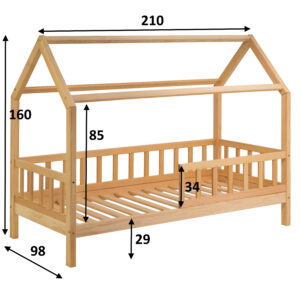
- 70×140 cm and 80×160 cm: Ideal first beds for toddlers aged 1.5 to 4 years. Low-profile frames and protective guardrails support independence by allowing little ones to climb in and out safely.
- 90×200 cm: A standard single bed size, perfectly suited for preschoolers and durable enough to handle growth spurts right into the teenage years. This is the most practical, budget-friendly option for long-term use.
Learn more about choosing a bed tailored to your child’s age and explore detailed information on bed dimensions and standard sizes.
Safety Requirements and Features for House Beds
Safety comes first when selecting furniture for children. When shopping for a house bed, pay close attention to structural details and safety standards:
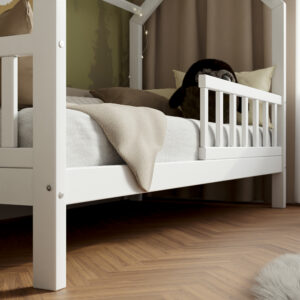
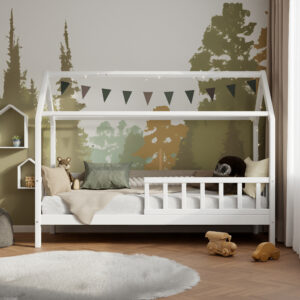
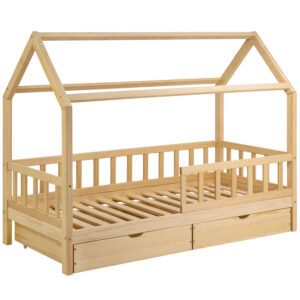
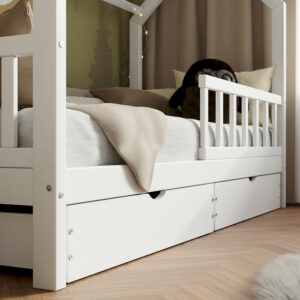
- Guardrails and Slat Spacing: Gaps between guardrails or vertical slats must not exceed 6 cm to prevent a child’s limbs or head from getting trapped.
- Precise Mattress Fit: The mattress must fit snugly inside the frame. If the gap between the mattress edge and the frame exceeds two fingers in width, it poses an entrapment risk.
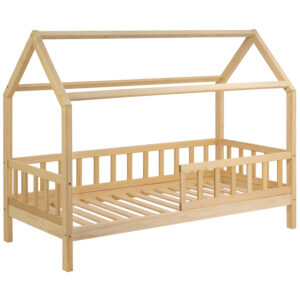
- Structural Weight Capacity: Thanks to precise joinery and high-quality solid pine, sturdy house beds offer a weight capacity of up to 95 kg, ensuring complete stability even when a parent sits beside the child for bedtime stories.
For a comprehensive overview of safety standards, read our guide on solid wood children’s bed safety requirements.
Materials and Finishes: Why Choose Solid Wood?
A healthy living environment in a child’s bedroom starts with natural, non-toxic materials. Unlike particleboard or MDF, solid wood does not off-gas harmful volatile organic compounds (VOCs) into your indoor air.
Several child-safe finish options are available:
- Natural Clear Finish: Highlights the organic warmth, unique grain pattern, and rich character of real wood.
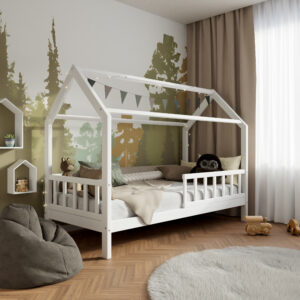
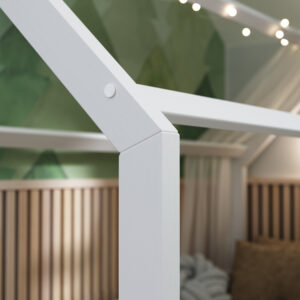
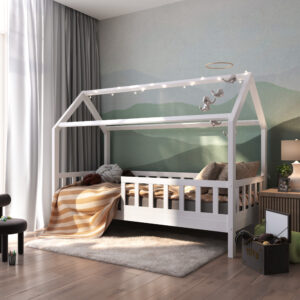
- White Finish: A timeless, crisp classic that brightens up smaller rooms and makes them feel open and airy.
Both options use child-safe, water-based, non-toxic lacquers. To compare materials and finishes, explore the advantages of pine vs. birch wood, examine the suitability of laminated wood for kids’ beds, or read more about color options and finishes for solid wood children’s beds.
Room Layout and Smart Storage Solutions
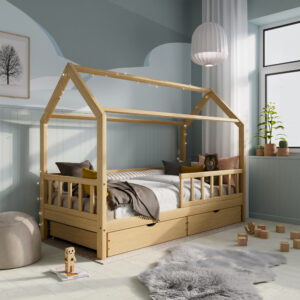
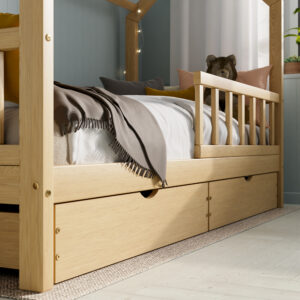
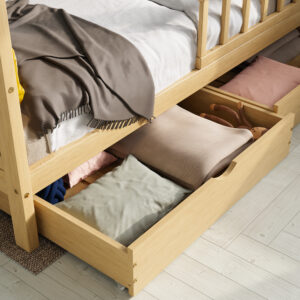
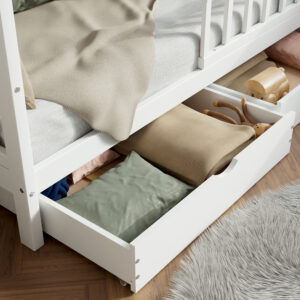
In compact homes, every square meter of floor space counts. Housebed Deluxe models are available with spacious under-bed storage drawers designed to neatly tuck away bedding, pillows, or everyday toys.
Utilizing under-bed drawers keeps the room organized and frees up valuable floor space for play. Read more about decorating ideas in our article on furnishing children’s rooms with solid wood furniture.
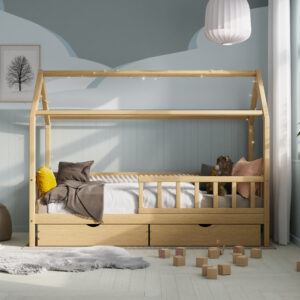
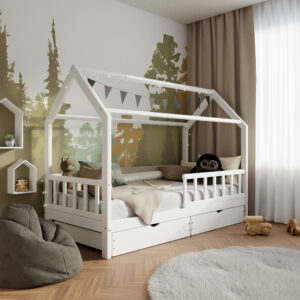
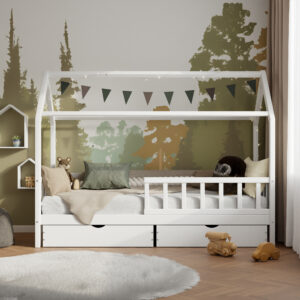
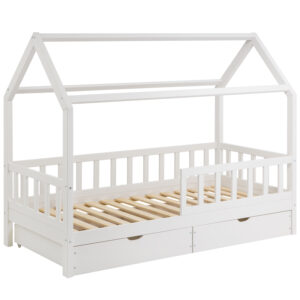
Choosing the right house bed strikes the perfect balance between your child’s needs, room layout, and strict safety guidelines. High-quality solid wood offers long-term durability, with the added flexibility to sand, refinish, or repaint the bed as your child grows.
Explore our collection of durable solid wood kids’ beds to create a safe, versatile, and cozy sleeping space for your child.