



A wooden dining table is a place at home where family gathers for shared meals and creating memories. But how do you ensure that your solid wood or laminated wood dining table surface remains beautiful and durable? One of the most important decisions is the choice of finish: oil or lacquer? Below, we compare these two approaches to help you find the ideal solution for your home.
Oiled and Lacquered Surfaces: Key Differences
How Does Oiling Work?
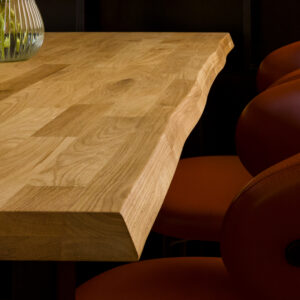
Wood oil penetrates between the wood fibers and deep into the wood, protecting it from the inside. An oiled surface is the most natural finishing method for wood, preserving the wood’s natural textures and patterns.
How Does Lacquering Work?
Lacquer forms a hard and thin protective layer on top of the wood that prevents liquids or dirt from coming into contact with the wood. Lacquer leaves a hermetic coating on the wood that protects it from external factors.
Appearance and Aesthetic Properties
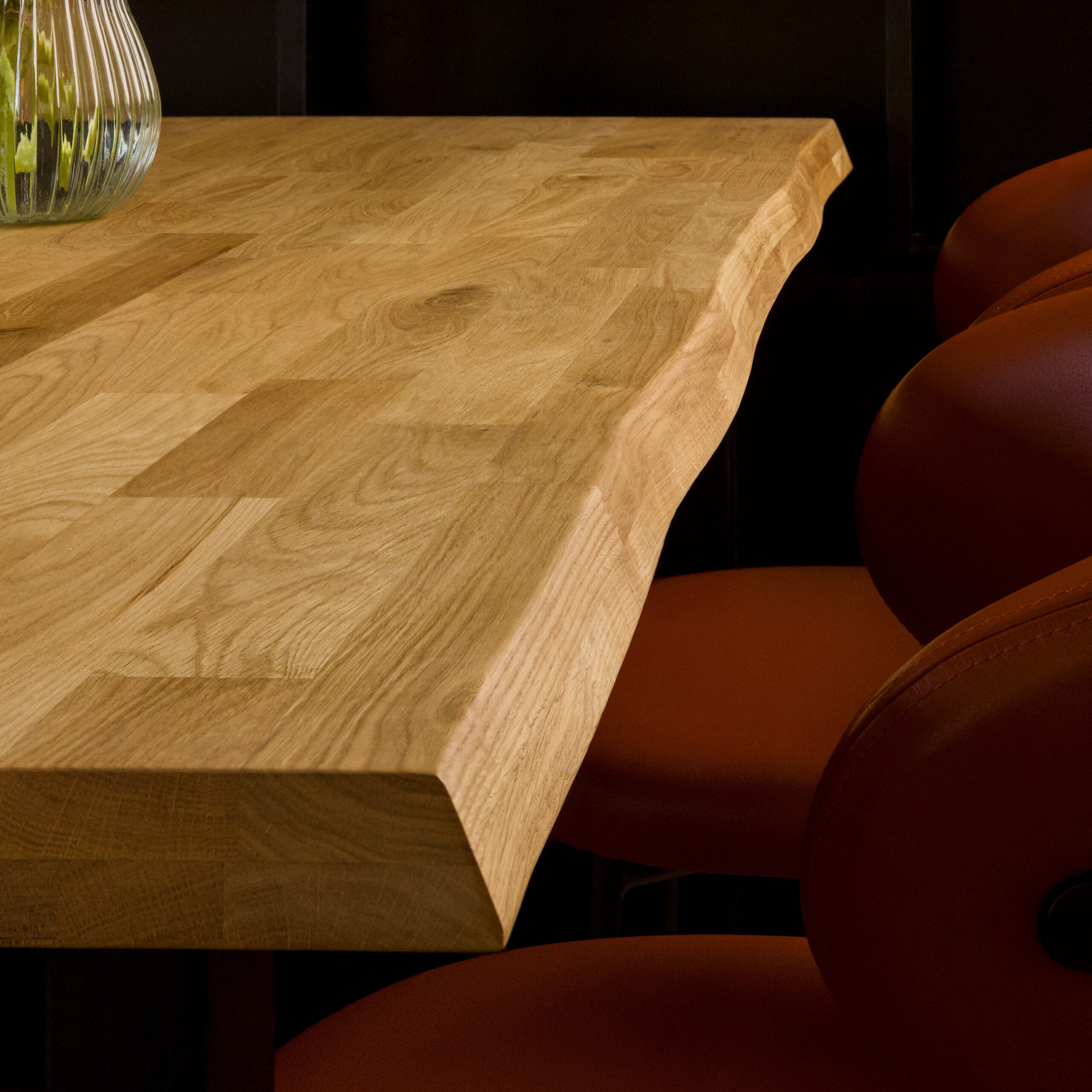
Oiled Dining Table Top:
- Creates a matte, natural appearance
- Highlights the wood’s natural look and texture
- Gives a more rustic, warmer, and traditional look
- Wood pattern is more distinctly perceptible
Lacquered Dining Table Top:
- Creates a more glossy surface (depending on the type of lacquer)
- Wood looks fresher and more vibrant
- Gives a modern, more contemporary appearance
- Reflects light better
Durability and Protection
Strengths of Oiled Surfaces:
- Better regulates moisture levels, preventing wood splitting
- Easy to repair with spot treatments
- Deeply absorbed oil protects the wood even when the top layer is worn
Strengths of Lacquered Surfaces:
- Better resistance to mechanical damage and scratches
- Excellent protection against liquids and stains
- Chemical and moisture resistant
Lacquer offers better resistance to wear but is more problematic for long-term maintenance because worn areas are harder to repair.
Maintenance and Longevity
Oiled Surface Maintenance:
- Requires regular maintenance, especially initially
- Initially recommended to oil the surface every 2-3 months, later 1-2 times per year
- Repairing stains and scratches is simple – lightly sand and apply a new layer of oil only to the damaged area
Lacquered Surface Maintenance:
- Minimal daily maintenance – wiping is sufficient
- Does not require periodic restoration
- Major damage requires sanding and re-lacquering the entire surface
Oiled surfaces are significantly easier to maintain at home, while restoring lacquered surfaces may require professional help.
Stain and Heat Resistance
Oiled Surface:
- Moderate stain resistance – oil protects but isn’t hermetic
- Stain absorption is possible if not removed quickly
- Hot item marks remain more easily
Lacquered Surface:
- Greater resistance to stains due to hermetic coating
- Hot items may leave matte-white marks that are difficult to remove
- High chemical resistance
Hard wax oil is a compromise that combines the natural look of oil with better stain protection like lacquer.
How to Choose the Right Finish for Your Home?
Choose Oiling When:
- You value the natural appearance and structure of wood
- You want a surface that’s easier to repair
- You’re ready for more regular maintenance
- Your home has an environment where humidity levels fluctuate
Choose Lacquering When:
- You want a surface requiring minimal maintenance
- You have children at home and maximum stain resistance is important
- You value a modern and glossy appearance
- You don’t want to regularly care for the tabletop
Solid Wood and Laminated Wood Table Specifics
Laminated wood products are more stable and less sensitive to moisture changes than solid wood. This makes them particularly suitable for lacquering, but oiling is certainly also a good choice.
-
-
-40%
Select options This product has multiple variants. The options may be chosen on the product page
- Dining Tables
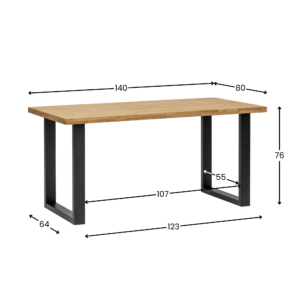
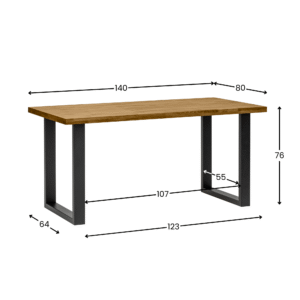
Dining Table LIIV
- Price range: 372.60€ through 399.60€
-
-
-
-
-
-
-40%
-
-
-40%
Select options This product has multiple variants. The options may be chosen on the product page
- Dining Tables
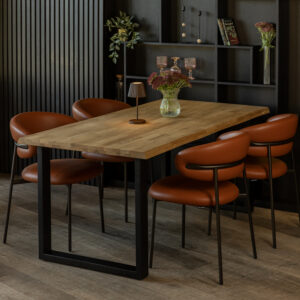
Dining Table MERI
- Price range: 372.60€ through 399.60€
-
-
-
-
-
-
-40%
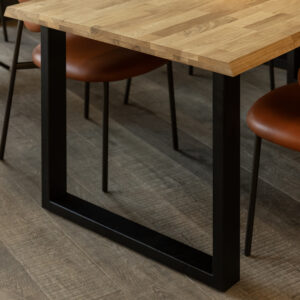
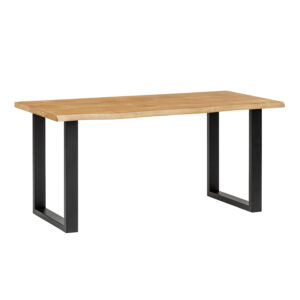
For solid wood tables, which you can see in our MERI and LIIV collections, oiling is often preferred because it allows the wood to “breathe” and better adapts to the natural movements of the wood.
-
-
-40%
Select options This product has multiple variants. The options may be chosen on the product page
- Dining Tables
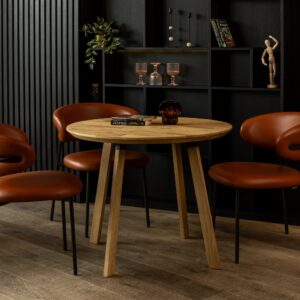
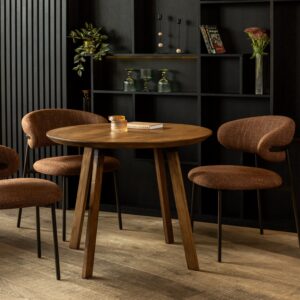
Dining Table PÄRL
- Original price was: 559.00€.335.40€Current price is: 335.40€.
-
-
-
-
-
-
-40%
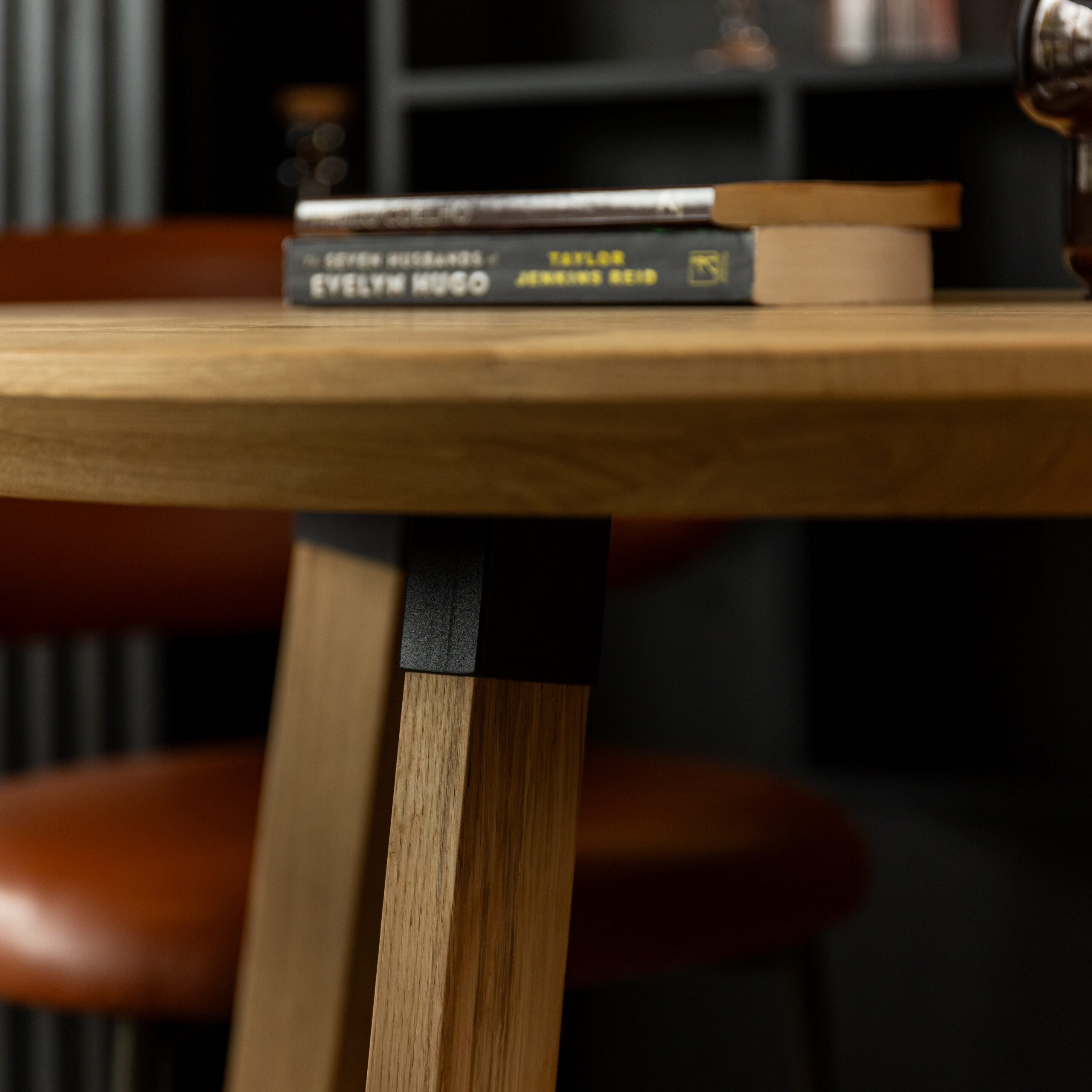
Maintenance
Oiled Surface Maintenance:
- Daily: Wipe away liquids immediately
- Weekly: Clean with a mild soap solution
- Monthly: Check if oiling is needed (a drop of water should remain on the surface for a while)
- Annual: Light sanding and restorative oiling
Lacquered Surface Maintenance:
- Daily: Wipe away liquids immediately
- Weekly: Clean with a soft cloth
- Years-long: Usually doesn’t need restoration unless there’s serious damage
- In case of damage: Sanding and re-lacquering the entire surface
Summary
Both oiling and lacquering have their advantages and disadvantages. Oiling creates a natural, warm, and easily maintainable surface that requires more regular attention. Lacquering provides stronger protection and less maintenance, but restoration is more difficult in case of major damage.
With Riverbank wooden furniture, you can be confident that both finishing options are of high quality. If you would like more information about our products or finishing methods, visit our worktop category or browse our dining table selection.
A good example of furniture with an oiled finish is our oiled wooden worktops, which have already won the hearts of many Estonian homes thanks to their durability and the warm beauty of natural wood.