




Few things are more frustrating for a builder or joiner than watching carefully selected timber warp, twist, or “move” due to moisture shortly after installation. For industry professionals, the choice between finger-jointed material and solid-stave (full-stave) wood is a critical decision where project budgets, structural stability, and final aesthetics converge.
The Engineering Behind Finger-Jointed Wood
Finger-jointed wood is a high-performance engineered product created by joining shorter wood segments end-to-end using interlocking, precision-cut profiles. These joints resemble interlaced fingers and, when bonded with high-quality adhesives, create a connection that is often stronger than the wood itself. This technology represents one of the most efficient uses of modern timber resources.
Unlike solid-stave glulam, which requires long, defect-free lengths of wood, finger-jointing technology allows manufacturers to strip away natural defects such as large knots, resin pockets, and cracks. During production, only the healthiest and strongest material is selected, resulting in a homogeneous product with consistent, controlled properties.
Why Choose Finger-Jointed Wood?
While solid-stave glulam is prized for its uninterrupted grain and traditional appearance, finger-jointed solutions offer several practical advantages that make them a preferred choice for many professional applications.
Exceptional Dimensional Stability
“Wood movement”—the expansion and contraction caused by fluctuations in temperature and humidity—is a constant challenge in construction and cabinetry. Finger-jointed wood is significantly more stable than either solid-stave material or standard timber. Because each panel is composed of multiple short segments, the internal stresses within the wood effectively neutralize one another. This drastically reduces the risk of warping or deformation, cracking, or twisting—an essential benefit when manufacturing precision items like window frames and door components.
Superior Value for Money
Finger-jointed material is typically 15–20% more affordable than solid-stave glulam. This price difference is the result of a highly resource-efficient production process that utilizes the shorter, premium-quality wood pieces remaining after full-length staves are cut. This eco-friendly approach makes high-quality hardwoods like birch or oak accessible at a more competitive price point without sacrificing technical performance or structural integrity.
Unrestricted Lengths and Dimensions
While the height of a tree dictates the maximum length of a solid-stave lamella, finger-jointing removes these natural constraints. At Riverbank, we produce glulam panels up to 4,000 mm long using precise jointing technology. These extended dimensions are vital for large-scale projects such as oversized kitchen islands, long shelving runs, or expansive wardrobe systems.
Strength and Durability in Construction
A common question among professionals is whether the joint creates a point of weakness. In reality, testing confirms the opposite. A correctly executed finger joint meets rigorous glulam strength classes, typically ranging from GL24 to GL36.
- Birch Glulam: Birch is a dense hardwood (averaging 657.71 kg/m³). Finger-jointing enhances its natural wear resistance, making it an ideal candidate for high-traffic staircases.
- Oak Glulam: Renowned for its hardness (reaching 1,360 lbf on the Janka scale), finger-jointed oak produces a material that is both aesthetically striking and virtually indestructible.
A look at various oak and birch processing methods shows that finger-jointing maximizes the value of premium species while ensuring long-term durability across various climates.
Practical Applications in Interior Design
Finger-jointed wood is the premier choice for projects where functionality and stability are paramount, or where the “mosaic” aesthetic of the joints adds modern character to the design.
- Furniture Frames: Given the strict furniture manufacturing requirements, a stable frame is the foundation of a product’s longevity.
- Worktops: Lacquered wood worktops perform better when made from finger-jointed panels, as they are less likely to deform when exposed to ambient kitchen moisture.
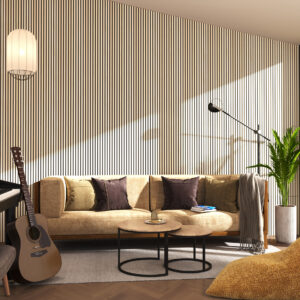
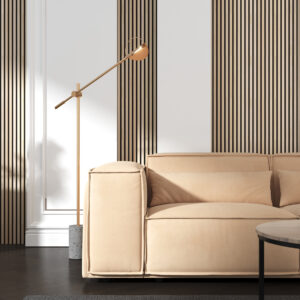
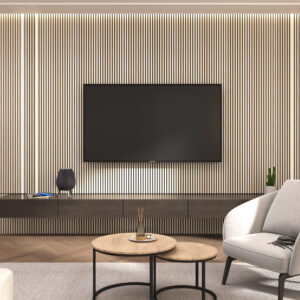
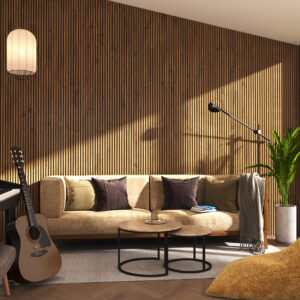
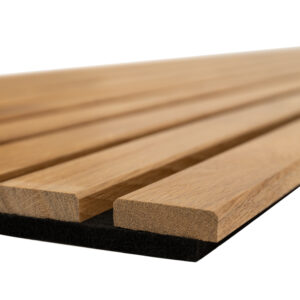
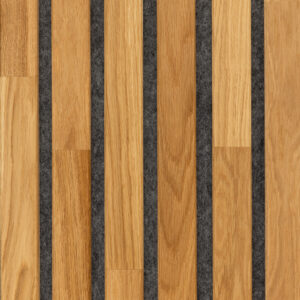
- Acoustic Solutions: Finger-jointed components are frequently used for wall paneling because they remain perfectly straight even across large surface areas.
-
-
Select options This product has multiple variants. The options may be chosen on the product page
- Wall panels
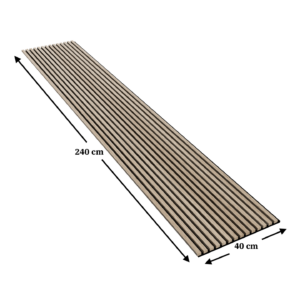
Acoustic wall panel – 18mm slats – 240×40 – natural solid birch
- Price range: 179.00€ through 305.00€
-
-
-
-
-
-
-
-
Select options This product has multiple variants. The options may be chosen on the product page
- Wall panels
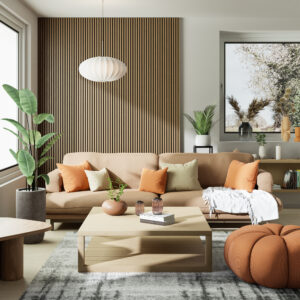
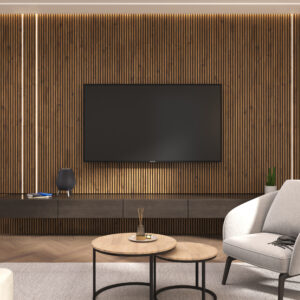
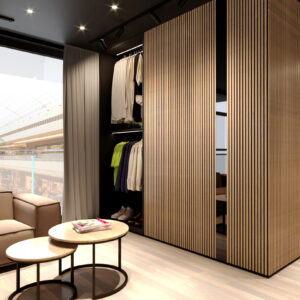
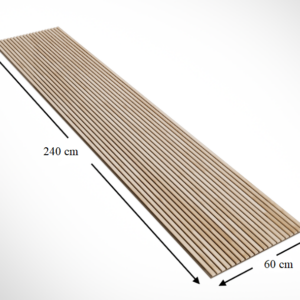
Acoustic wall panel – 18mm slats – 240×60 – dark solid oak
- Price range: 209.00€ through 365.00€
-
-
-
-
-
-
-
-
Select options This product has multiple variants. The options may be chosen on the product page
- Wall panels
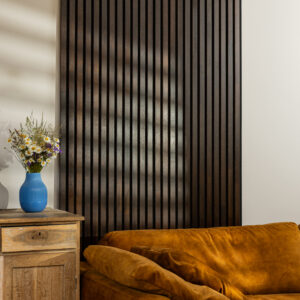
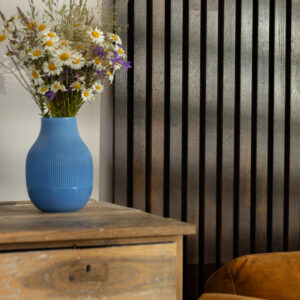
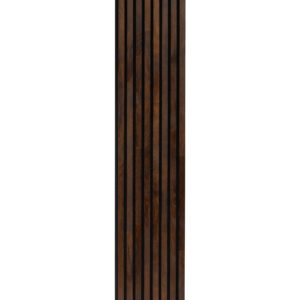
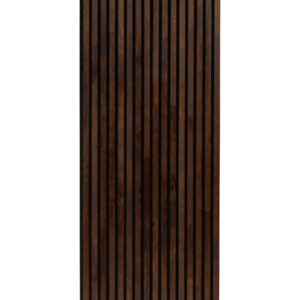
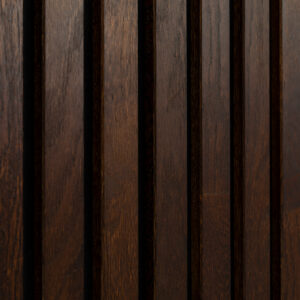
Acoustic wall panel – 35mm slats – 240×40 – choco solid wood
- Price range: 179.00€ through 305.00€
-
-
-
-
-
-
-
-
Select options This product has multiple variants. The options may be chosen on the product page
- Wall panels
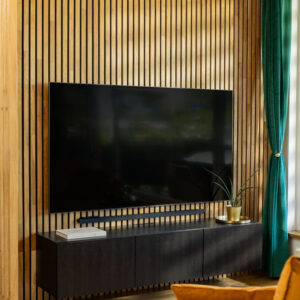
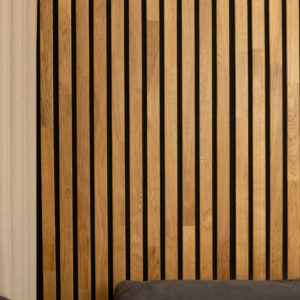
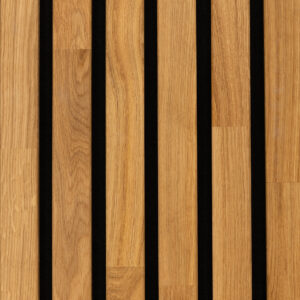
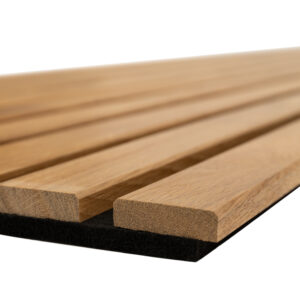
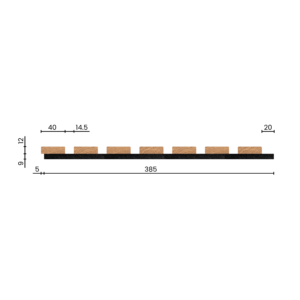
Acoustic wall panel – 40mm slats – 240×40 – natural oak
- Price range: 215.00€ through 365.00€
-
-
-
-
-
-
Finishing and Aesthetic Character
When finishing finger-jointed wood, it is important to note that segments with different grain orientations may absorb stains or oils at slightly different rates. This creates a vibrant, multi-tonal pattern often sought after in contemporary interiors. For those preferring a more uniform look, using a high-quality lacquer or a darker oil can help blend the joints. Before beginning treatment, we recommend consulting our finishing and treatment guidelines.
-
-
Select options This product has multiple variants. The options may be chosen on the product page
- Wall panels
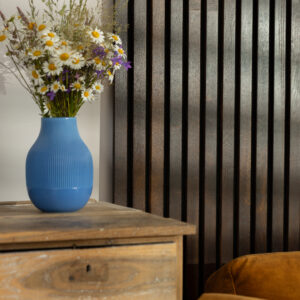
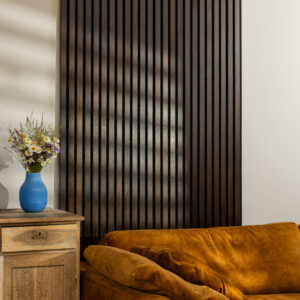
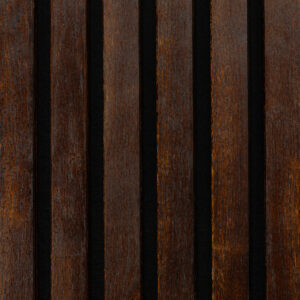
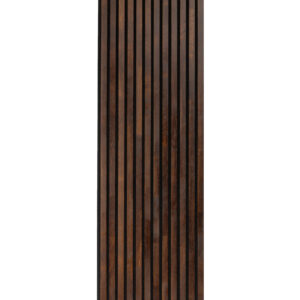
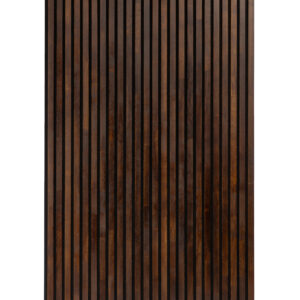
Acoustic wall panel – 35mm slats – 240×60 – choco solid oak
- Price range: 215.00€ through 365.00€
-
-
-
-
-
-
-
-
Select options This product has multiple variants. The options may be chosen on the product page
- Wall panels
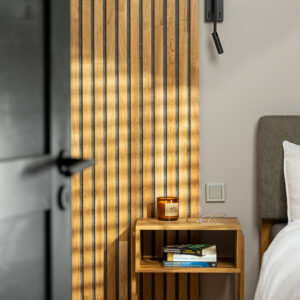
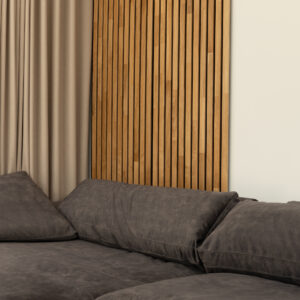
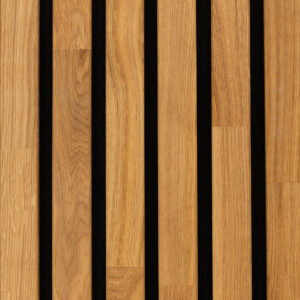
Acoustic wall panel – 40mm slats – 240×60 – natural oak
- Price range: 215.00€ through 365.00€
-
-
-
-
-
-
Ultimately, finger-jointed wood is not just a budget-friendly alternative; it is a strategic choice for professionals who prioritize maximum stability and a high price-to-quality ratio. By selecting the right technology, you ensure that everything from a heavy dining table to a grand staircase remains a centerpiece for decades. If you require custom dimensions or advice for your next project, contact us to find the perfect combination of thickness and wood species.