




Whether you are drawn to the timeless beauty of natural wood or the clean versatility of painted MDF, selecting the right material is one of the most critical decisions in furniture selection and design. Your choice directly influences a piece’s lifespan, structural performance, and maintenance requirements. Here is a detailed comparison between glued laminated timber and MDF to help you decide which material best suits your space.
What Are Glued Laminated Timber and MDF?
When buying or crafting furniture, two main material categories dominate the market: natural solid timber in the form of glued laminated wood, and engineered wood composites represented primarily by MDF. These materials differ significantly in their manufacturing processes and core structural characteristics.
- Glued laminated timber is constructed by bonding solid wood staves—such as oak, birch, or pine—together under heat and pressure. Learn more about the specifics of manufacturing glued laminated timber furniture and discover how modern glued laminated timber manufacturing technologies assemble finger-jointed or full-length staves into stable, durable panels.
- MDF (Medium-Density Fiberboard) is an engineered wood composite produced by breaking down timber residue into fine wood fibers, combining them with synthetic resins and wax, and compressing them under high temperature and pressure. The result is a smooth, homogeneous panel without natural grain patterns.
Durability and Mechanical Strength
A piece of furniture’s longevity depends directly on its material density, moisture resistance, and overall structural integrity.
Because glued laminated timber retains the natural cellular structure of solid wood, it offers exceptional flexural strength and reliable screw retention. For example, birch glued laminated timber has an average density of 657.71 kg/m³, while oak features a Janka hardness rating of approximately 1,360 lbf. These natural properties make solid wood remarkably resilient against impacts and daily wear. Read more in our durability comparison of oak and birch glued laminated timber.
While MDF is also dense, it lacks a natural directional grain structure. Under continuous heavy loads across long spans, it is prone to sagging over time. MDF is also sensitive to moisture; if water penetrates unsealed edges, the board can permanently swell and degrade. Furthermore, its screw-holding capacity diminishes significantly if furniture is repeatedly disassembled and reassembled.
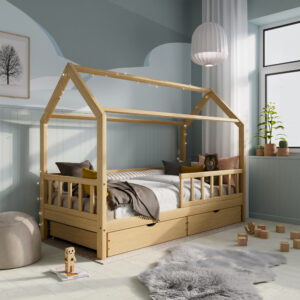
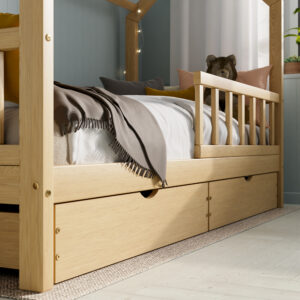
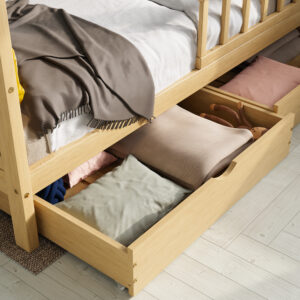
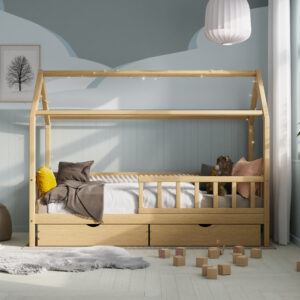
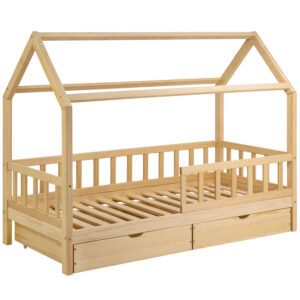
For applications requiring high load-bearing capacity and resilience—such as sturdy children’s beds or heavy-duty shelving systems—glued laminated timber provides superior long-term performance.
Appearance and Finishing Options
Visual character plays a central role when designing home interiors.
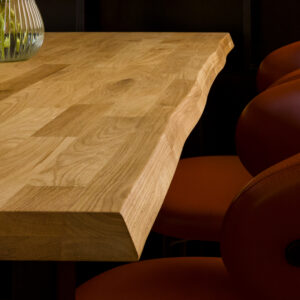
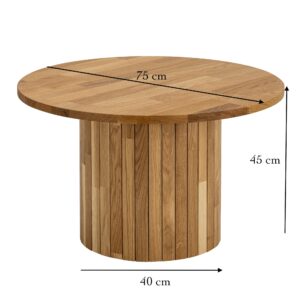
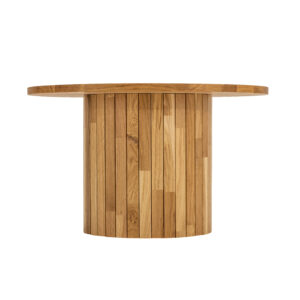
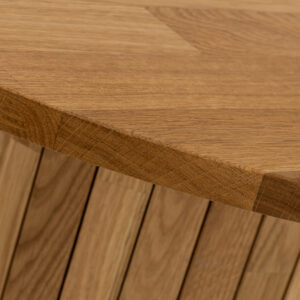
Every glued laminated timber panel is unique, showcasing natural grain variations, warm color tones, and tactile surface texture. The wood can be oiled, waxed, or lacquered to enhance its natural aesthetic. To better understand these natural qualities, learn about key indicators of glued laminated timber quality and proper techniques for finishing and treating glued laminated timber.
MDF does not have a wood grain. Thanks to its uniform, smooth surface, it serves as an ideal substrate for painting and precision routing on cabinet fronts. If your goal is a seamlessly smooth, high-gloss or matte painted surface free of wood texture, MDF is a practical choice.
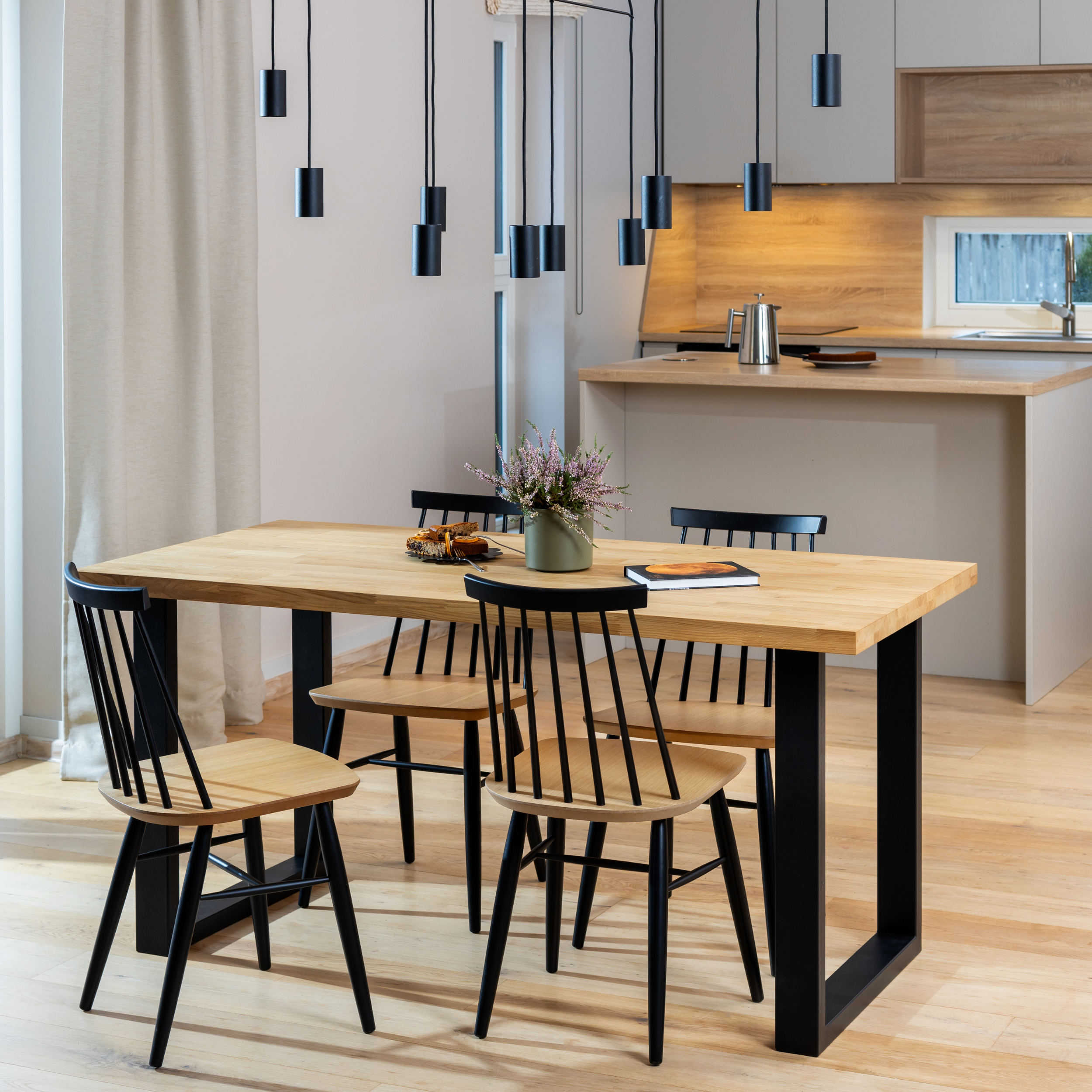
For centerpiece furniture where premium texture takes priority—such as dining tables that serve as focal points in dining or living spaces—the organic warmth and elegance of glued laminated timber remain the preferred option.
-
-
-40%
Select options This product has multiple variants. The options may be chosen on the product page
- Dining Tables
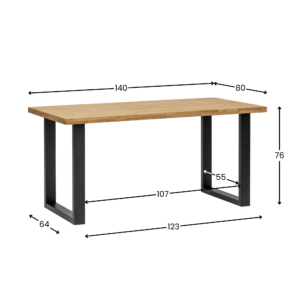
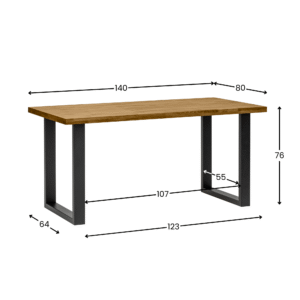
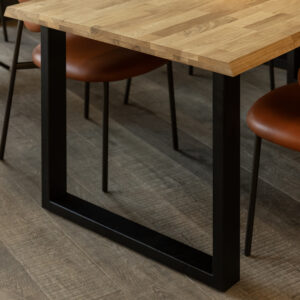
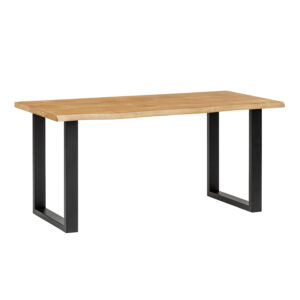
Dining Table LIIV
- Price range: 372.60€ through 399.60€
-
-
-
-
-
-
-40%
-
-
-40%
Select options This product has multiple variants. The options may be chosen on the product page
- Dining Tables
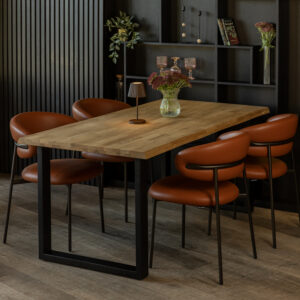
Dining Table MERI
- Price range: 372.60€ through 399.60€
-
-
-
-
-
-
-40%
-
-
-40%
Select options This product has multiple variants. The options may be chosen on the product page
- Dining Tables
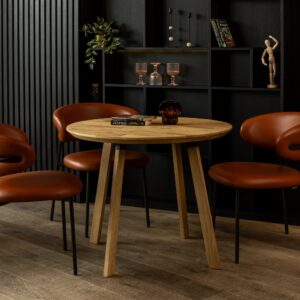
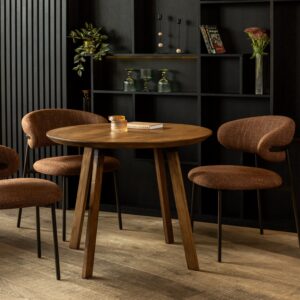
Dining Table PÄRL
- Original price was: 559.00€.335.40€Current price is: 335.40€.
-
-
-
-
-
-
-40%
Price and Long-Term Value
When evaluating materials, it pays to balance initial purchase costs against total lifecycle value.
Thanks to its automated production process, MDF generally features a lower upfront cost, making it an affordable option for temporary furniture or low-stress components.
Glued laminated timber requires a higher initial investment, but its potential lifespan spans decades. Solid timber furniture can be completely restored—surface scratches and dents can be sanded away, and the finish can be re-applied as needed. Explore the ecological benefits of birch glued laminated timber.
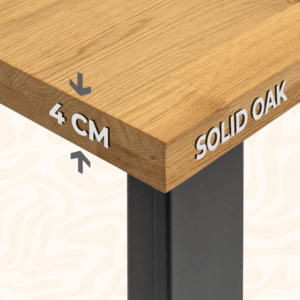
Our selection includes premium birch glued laminated timber panels and other in-stock products, with panel thicknesses ranging from 15 mm to 50 mm for maximum structural stability.
Maintenance and Environmental Impact
Maintenance demands and indoor air quality impact are critical considerations for any home environment.
MDF furniture requires little routine care beyond wiping with a damp cloth. However, if its outer laminate or edge banding suffers severe water or mechanical damage, repairing it is nearly impossible. Glued laminated timber surfaces require routine maintenance according to their finish. Oiled surfaces benefit from periodic re-oiling, which can be tested using a droplet of water—if water beads on the surface, the finish is intact. Follow expert recommendations in our guide on the importance of regular maintenance for glued laminated timber surfaces.
Solid wood is a natural, renewable, and hypoallergenic material that naturally helps regulate room humidity levels. MDF relies on synthetic binders during production. While modern manufacturing standards (such as EPA limits capping formaldehyde emissions for MDF at 0.11 ppm) ensure safety in living areas, cutting or machining MDF produces fine wood dust.
When to Choose Glued Laminated Timber vs. MDF
Both materials have distinct strengths depending on the application. Consider the following guidelines when deciding:
Choose glued laminated timber if:
- You want durable furniture built to last for generations that can be refinished over time.
- You appreciate natural wood grain, warmth, and distinct aesthetic character.
- You require high structural load capacity (e.g., solid tabletops, heavy-duty shelves, or bed frames).
- You prefer natural, sustainable materials (read more on the advantages of pine vs. birch wood in furniture).
Choose MDF if:
- You need a cost-effective solution for painted cabinet doors or decorative wall paneling.
- You prefer an ultra-smooth, uniform painted finish with no natural wood texture.
- The furniture will be used in dry environments free from heavy mechanical stress or excess moisture.
When choosing your furniture materials, consider not only your upfront budget but also the intended lifespan and restoration potential of the piece. Premium solid wood and glued laminated timber add lasting value to any space and, with routine care, serve as a worthwhile investment for decades.
Looking for high-quality glued laminated timber panels or custom furniture for your project? Riverbank OÜ manufactures premium birch, oak, and pine glued laminated timber alongside solid wood furniture. Explore our product range or contact us directly for custom orders at +372 509 9151.