



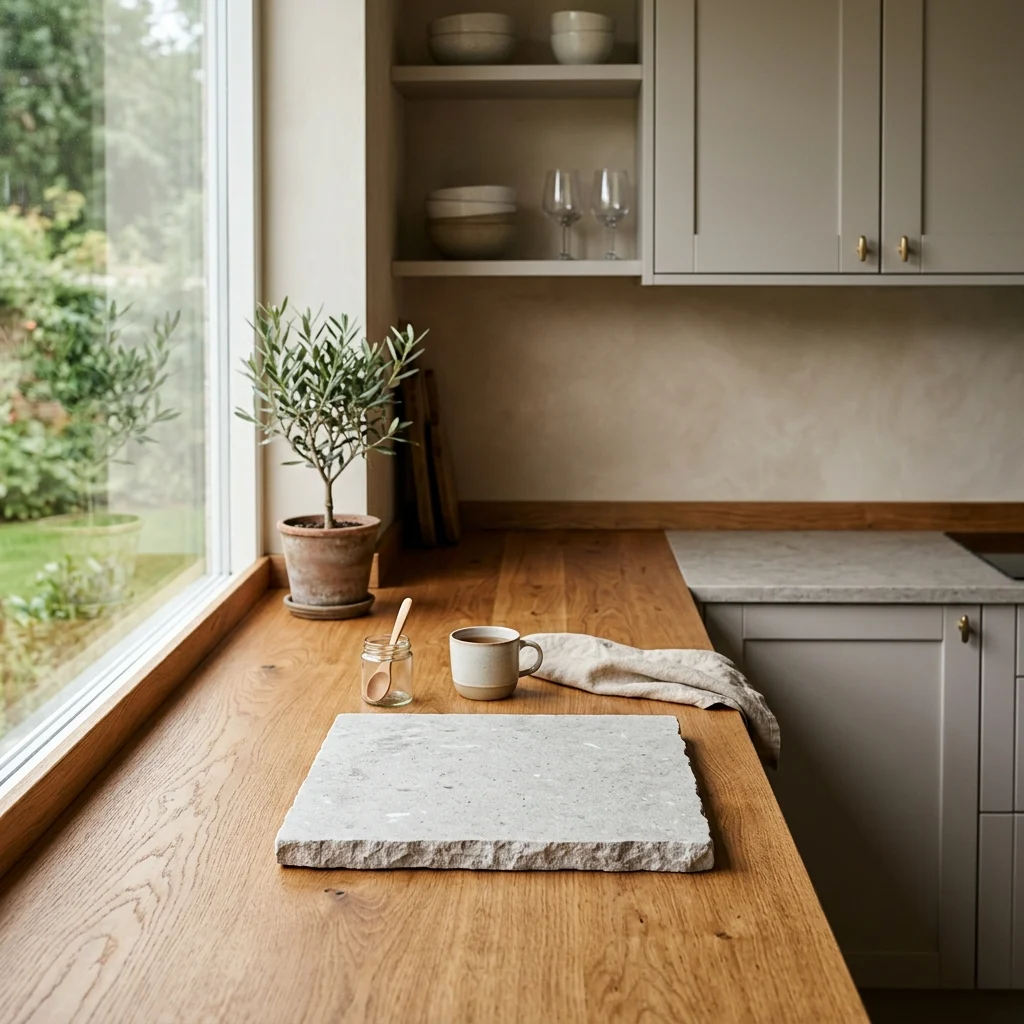
Choosing between the luxurious look of natural stone and the organic warmth of solid oak is a major decision for any homeowner. A kitchen worktop is an investment designed to last for decades, making it essential to weigh durability, maintenance requirements, and long-term value before committing to a material.
Durability and Resilience
Both solid wood and stone are celebrated for their longevity, but they handle wear and tear differently. Stone—such as granite or quartzite—is exceptionally hard and highly resistant to scratches. However, its hardness comes with brittleness. If a heavy cast-iron pot is dropped on a stone surface, it can chip or crack—damage that is notoriously difficult, if not impossible, to repair at home.
Solid wood offers a different kind of strength characterized by flexibility and warmth. Oak is particularly resilient, boasting a Janka hardness of approximately 1,360 lbf, which makes it a premier choice for high-traffic kitchens. Perhaps the greatest advantage wood has over stone is its repairability. Dents or scratches aren’t permanent; the surface can be easily sanded down and re-oiled to look brand new. The birch and oak glue-laminated wood produced by Riverbank is engineered for stability, resisting deformation and remaining beautiful for generations with proper care.
Maintenance and Daily Care
Maintenance is often the deciding factor for homeowners. Stone and wood require distinct care routines to stay in peak condition:
- Stone Worktops: Granite and marble are naturally porous. They must be sealed regularly with specialized products to prevent liquids from staining the core. Marble is especially vulnerable to “etching”—dull spots caused by acidic liquids like lemon juice or wine.
- Solid Wood Worktops: An oiled wood worktop requires periodic refreshing to maintain its water resistance. For a surface in daily use, oiling once a quarter is recommended. For those seeking a lower-maintenance option, a lacquered wood worktop is an excellent alternative, typically only requiring a fresh coat every 5 to 10 years.
Regardless of the material, harsh chemicals should be avoided in favor of pH-neutral cleaners. A comprehensive maintenance guide for wooden worktops suggests wiping away spills immediately to prevent moisture from penetrating deep into the wood fibers.
Heat and Moisture Resistance
While stone is more heat-resistant than wood, neither is entirely immune to thermal shock. While you can briefly set a warm pot on granite, sustained heat can cause micro-cracks. When using an oak worktop, trivets are essential to prevent scorching, discoloration, or the wood drying out and cracking.
In terms of moisture, oak is surprisingly hardy thanks to its natural tannins. Riverbank offers worktops in various dimensions, noting that the choice of worktop thickness is a key factor in stability. Thicker panels (40–50 mm) offer the best resistance to warping, though proper sealing around sinks and faucets is critical for any material.
Cost and Installation
Solid wood is generally the more affordable and versatile option regarding budget and installation. Stone—particularly rare quartzite or marble—comes with a higher price tag and requires professional installation due to its immense weight and the risk of cracking during transport.
The advantages of wood for your renovation budget include:
- Affordability: Birch is approximately 15–20% more cost-effective than oak, providing excellent durability and value.
- Ease of Installation: Installing a wooden worktop is far more flexible. Precise cuts and adjustments can be made on-site to fit the unique contours of your kitchen.
- Large-Scale Seamlessness: Riverbank can produce glue-laminated panels up to 4000 mm long and 1300 mm wide, allowing even large kitchen islands to be covered without distracting seams.
Which Material Is Right for You?
The final choice depends on your lifestyle and aesthetic preferences. If you prefer a cool, sterile aesthetic and a surface that requires little attention beyond sealing, stone may be the right fit. However, if you value a kitchen that feels warm and inviting—with a material that develops a beautiful character over time—solid wood is the ideal choice. Wood is also a renewable, eco-friendly resource that brings a unique, natural grain to the heart of the home.
Before making your final decision, consider the pros and cons of wooden worktops. Explore our range of premium oak worktops and find a solution that will serve your home for generations. For a detailed quote or consultation, contact us at +372 509 9151.